UK beauty industry news offers a useful view of how brands, retailers, professionals and consumers are shaping the country’s rapidly changing beauty market. From new product launches and retail developments to technology, business strategy and changing customer expectations, the sector continues to evolve across skincare, cosmetics, haircare, fragrance and personal care.
Keeping up with beauty business news UK developments is valuable for anyone interested in the industry. Consumers can better understand where new products and services come from, while beauty professionals and businesses can identify wider changes that may influence customer expectations and competition.
Why UK Beauty Industry News Matters
The beauty industry is influenced by several forces at once. Consumer preferences can change, retailers can introduce new shopping experiences, brands can develop new products and technology can alter how customers discover and purchase beauty products.
Because these developments are interconnected, following individual product launches is only one part of understanding the market. Industry news can reveal broader patterns behind those launches, including changes in retail strategy, customer priorities and competition between established and emerging businesses.
For consumers, this wider perspective can also make beauty news more useful. Instead of simply knowing that a product exists, readers can consider why it has appeared, which customer need it addresses and how it fits into the broader beauty market.
UK Beauty Industry News and Changing Consumer Expectations
Consumer expectations play a central role in the direction of the beauty sector. Today’s shoppers have access to extensive product information and can compare options across multiple retailers before making a purchase.
This creates greater pressure for brands to communicate clearly. Product descriptions, ingredient information, usage instructions, pricing and customer service can all influence the overall shopping experience.
These developments connect closely with wider UK beauty consumer trends, where changing shopping habits and purchasing preferences are reshaping how customers interact with beauty brands.
Beauty Retail News: How Shopping Is Evolving
Beauty retail continues to combine physical and digital experiences. Consumers may discover a product through online content, research it on a retailer’s website, visit a physical store and then compare purchasing options before making a final decision.
This creates an increasingly connected retail environment. Businesses need to consider the complete customer journey rather than treating online and offline shopping as completely separate experiences.
The Role of Physical Stores
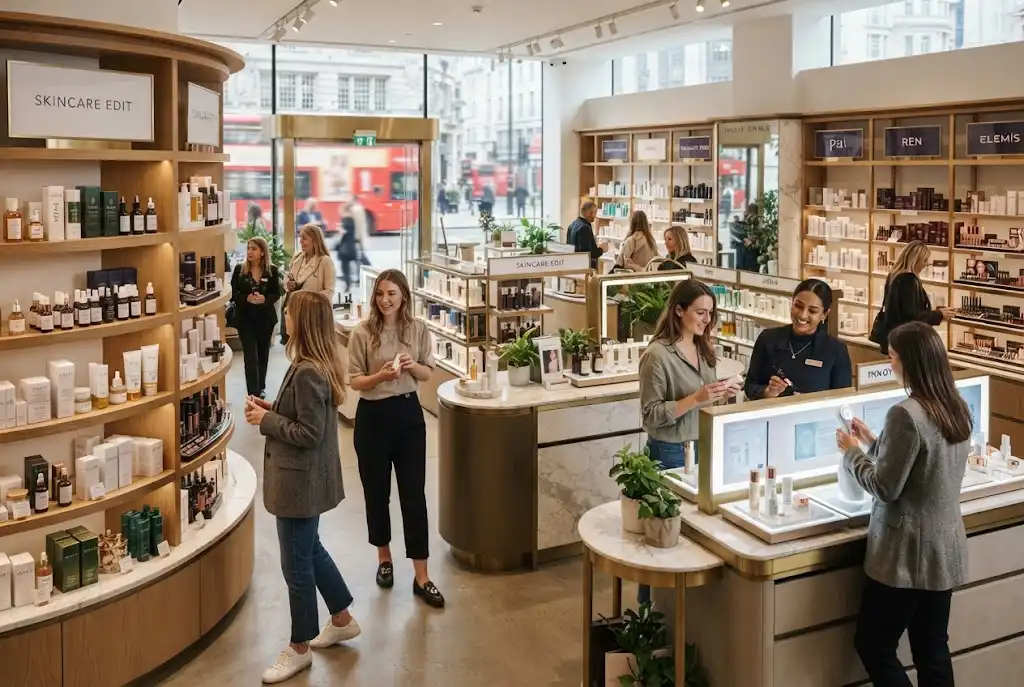
Physical beauty stores continue to offer benefits that digital shopping cannot fully reproduce. Customers can examine packaging, experience certain products and sometimes receive personal advice from trained staff.
For premium beauty categories in particular, the physical environment can form an important part of the customer experience. Store presentation, service quality and product discovery can influence how shoppers perceive a brand.
The Importance of Digital Retail
Online beauty retail provides convenience and extensive choice. Customers can compare products, read reviews and check purchasing information without travelling to a store.
For brands, this also creates opportunities to educate customers through detailed product pages, tutorials and useful editorial content. However, a large amount of information does not automatically create a better experience. Clear, relevant information is generally more useful than unnecessary complexity.
Beauty Brand News and Product Development
Beauty brand news frequently centres on new products, updated formulations, collaborations, packaging changes and new approaches to customer engagement. Product launches attract attention because they provide a visible sign of how brands are responding to the market.
However, a successful launch involves more than introducing something new. Brands need to understand the problem the product is intended to solve and communicate its purpose clearly.
Consumers can also benefit from looking beyond launch campaigns. Understanding how a product should be used, who it is designed for and whether it fits an existing routine can help shoppers make more considered decisions.
Beauty Product Launches in a Competitive Market
Beauty product launches are increasingly surrounded by content. Brands can use social media, creators, email campaigns, retail displays and editorial coverage to introduce products to potential customers.
This creates both opportunities and challenges. A strong launch can help consumers discover an innovative product, but constant exposure to new releases can also make the market feel overwhelming.
For that reason, useful beauty journalism should distinguish between simply announcing a launch and explaining why it matters. Context, product purpose and consumer relevance can make industry coverage considerably more valuable.
Beauty Technology News and Digital Innovation
Technology is becoming an increasingly visible part of beauty retail and customer engagement. Digital tools can help consumers discover products, access information and interact with brands in new ways.
Technology may also support personalisation. Retail platforms can use customer preferences and browsing behaviour to make product discovery more relevant. However, personalisation needs to remain useful and transparent rather than becoming a source of unnecessary complexity.
The broader lesson is that technology should support the customer journey. A digital feature is most valuable when it makes discovery, comparison, education or purchasing easier.
Beauty Company News and Business Strategy
Beauty company news extends beyond consumer-facing products. Businesses across the sector make decisions about retail partnerships, distribution, product portfolios, marketing, technology and customer experience.
Large companies may have significant resources to expand their presence, while independent brands can compete by developing distinctive products and establishing strong relationships with specific audiences.
This diversity is one reason the UK beauty sector remains interesting to follow. Consumers can encounter products from global companies, British brands, independent businesses and emerging founders within the same shopping journey.
How Beauty Businesses Respond to Market Competition
Competition encourages businesses to identify what makes their products or services relevant. For some brands, this may involve developing a distinctive product concept. Others may compete through customer service, retail experience, education or convenience.
Successful positioning does not necessarily mean appealing to the largest possible audience. A clear understanding of a particular customer’s needs can help a brand build a more focused proposition.
This is particularly relevant as consumers become more selective. When shoppers have many alternatives, unclear positioning can make it harder for a brand to communicate why its products deserve attention.
Beauty Market News and the Role of Consumer Behaviour
Beauty market news becomes easier to interpret when consumer behaviour is considered alongside business activity. A retailer’s decision to expand a particular category, for example, may reflect changing customer interest or a perceived opportunity in the market.
Likewise, increased attention around a product type may encourage more brands to develop competing products. This can create greater choice for consumers while also making differentiation more difficult for businesses.
The relationship between supply and demand therefore remains important. Industry developments influence consumers, while consumer preferences influence the products and services businesses choose to provide.
Beauty Industry Updates and the Importance of Trust
As beauty information becomes easier to publish and share, trust becomes increasingly important. Consumers encounter product recommendations through brands, retailers, creators, advertisements, reviews and independent publications.
Reliable beauty industry updates should distinguish factual information from promotional claims. Readers benefit when reporting clearly identifies what has happened, who is involved and what remains uncertain.
For brands, transparent communication can also strengthen relationships with customers. Clear claims and useful product information allow shoppers to make decisions based on evidence rather than exaggerated expectations.
What Beauty Professionals Can Learn From Industry Developments
Beauty professionals can use industry news to understand changes in customer expectations and service preferences. Salon owners, therapists, makeup artists and other professionals may encounter new products, techniques and technologies as the market develops.
However, staying informed does not mean adopting every new trend. Professionals can assess developments according to their clients’ needs, the quality of available information and the practical value a new approach offers.
A selective approach can help businesses remain current without constantly changing their services in response to short-lived trends.
The Connection Between Beauty News and Everyday Self Care
Industry developments eventually reach consumers through products, services and routines. A new skincare launch, for example, may become part of someone’s everyday personal care habits.
That connection makes it useful to approach beauty news alongside practical guidance. Our guide to beauty self care explores how skincare, grooming and personal rituals can fit into everyday life without creating unnecessary complexity.
The relationship works in both directions. Consumer demand influences industry development, while new products and services can introduce consumers to different approaches to personal care.
What to Watch in UK Beauty Industry News
Readers following the UK beauty sector can look beyond individual launches and watch for developments that indicate wider market changes. Useful areas to follow include:
- Changes in beauty retail and shopping experiences.
- New product categories and formulation developments.
- Emerging British beauty brands and independent businesses.
- Digital tools and technology used in beauty retail.
- Changes in customer expectations and purchasing behaviour.
- New beauty services and professional treatment concepts.
- Business partnerships and changes in distribution.
- Developments affecting the wider beauty market.
Following these areas together provides a more complete picture than focusing on isolated headlines.
The Future of the UK Beauty Industry
The future beauty market will likely remain diverse, competitive and closely connected to changing consumer expectations. Businesses will continue looking for ways to differentiate their products, improve customer experiences and respond to new opportunities.
Technology will remain part of this evolution, but human factors will continue to matter. Consumers still want useful information, trustworthy products, convenient purchasing and experiences that fit their individual needs.
Regional beauty culture may also contribute to the sector’s diversity. London’s influential beauty scene, for example, represents one part of the wider UK market, while other cities and regions have their own businesses, professionals and consumer communities. Readers can explore our dedicated London beauty coverage for more on the capital’s beauty culture and trends.
Final Thoughts on UK Beauty Industry News
UK beauty industry news is about more than new products and business announcements. It provides insight into the relationship between brands, retailers, technology, professionals and consumers.
For consumers, following reliable industry developments can make it easier to understand the products and services entering the market. For businesses, industry awareness can help identify changing expectations and emerging opportunities.
The most useful approach is to look at the bigger picture. Product launches, retail developments, technology and consumer behaviour are connected parts of the same market. By following these developments together, readers can gain a clearer understanding of where the UK beauty industry is heading and why those changes matter.