
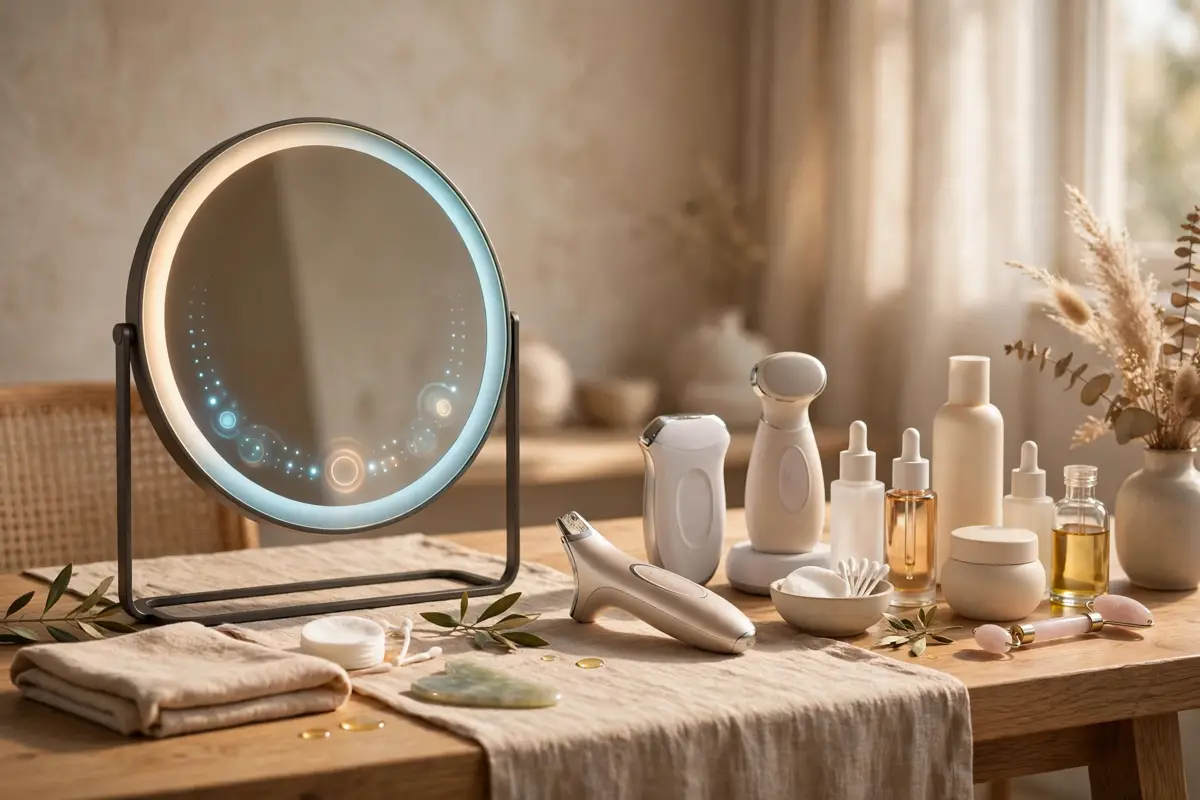
Beauty technology UK is no longer a niche corner of the beauty industry. It is the software, devices and data now sitting behind many everyday routines, from a phone camera that analyses your skin to a mirror that lets you try on lipstick without opening a tester. For UK readers, the appeal is simple: technology promises better choices, less guesswork and products that fit your skin, your shade and your schedule. This guide explains what beauty tech includes, which trends matter, where caution is wise, and what is actually useful.
In short, beauty technology UK means using digital tools and connected devices to choose, create and use beauty products more precisely. It covers skincare, makeup, hair care and fragrance, at home, in store and online. Some tools are genuinely helpful. Others solve problems you may not have. The difference usually lies in whether the technology improves a decision you already make, such as finding a foundation shade, or simply adds another step, another subscription and another charger to your bathroom shelf.
What Beauty Technology UK Covers: More Than Gadgets
Beauty tech UK is a broad label, and that breadth explains why the subject can feel confusing. It includes simple tools, such as a quiz that recommends a moisturiser, and complex systems that scan a face, map its features and build a personalised routine around the results. Most products and services fall into a few familiar groups.
- AI skin analysis: software that studies a selfie or scan and comments on visible concerns such as dryness, uneven tone or breakouts.
- Smart mirrors: mirrors with screens, lighting and cameras that can show tutorials, track changes or simulate makeup.
- Virtual try-on: augmented reality tools that place lipstick, foundation or hair colour on a live image of your face.
- LED and microcurrent devices: handheld tools designed for use on the skin at home, often as part of a regular routine.
- Personalised formulation: products mixed or selected around an individual profile, skin type or set of answers.
- Beauty apps: apps for tracking routines, scanning ingredient lists, booking treatments and reordering products.
None of these ideas needs to be complicated to be useful. Often, the best technology is the kind you barely notice, because it quietly helps you choose well and then gets out of the way.
Beauty Technology Trends Shaping UK Routines
Several beauty technology trends keep appearing because they answer real frustrations: products that do not suit your skin, shades bought in the wrong light, and advice that feels generic. These shifts also reflect wider UK beauty consumer trends, where shoppers expect convenience, honesty and value.
Personalisation Becomes the Default
Personalisation is the strongest thread in modern beauty tech. Instead of selling one cream to everyone, brands ask questions, analyse images and adjust recommendations to the individual. Done well, this saves time and reduces waste, because you buy fewer unsuitable products. Done badly, it is just a long quiz leading to the same shelf. The test is whether the questions feel relevant and whether you can change, reject or refine the recommendations easily.
Salon Technology Moves Home
Another clear trend is professional-style technology moving into the home. Devices once associated with salons and clinics now arrive in smaller, simpler forms for the bathroom shelf. That suits busy routines and regular beauty and self-care habits, although home tools still need patience and consistent use. They also need clear instructions, sensible safety guidance and realistic expectations about what a handheld device can do.
Data-Led Skincare Technology
Data is the third big shift. Apps and devices can log products, photograph skin over time and remind you what you used and when. That record can be more useful than memory, especially if your skin reacts to a new product. However, data only helps if you look at it calmly. A single photograph in harsh light is not a diagnosis, and a score on an app is a guide, not a medical judgement.
Skincare Technology: From Guesswork to Guidance
Skincare technology is where many people meet beauty tech first, because skincare choices are personal and mistakes can be expensive. A skin analysis tool can highlight patterns you might miss, suggest a simpler routine and flag ingredients you already know you prefer to avoid. It can also help beginners build an order of use, which is often where routines go wrong.
The sensible way to use these tools is as a second opinion. Start with what your skin feels like, not only what a screen says. Introduce one change at a time, give it a fair trial and stop if your skin reacts badly. Technology can organise information well, but your own experience remains the final check, and persistent skin concerns belong with a qualified professional, not an app.
Cosmetic Technology UK: How Shopping for Beauty Is Changing
Cosmetic technology UK is changing how people shop as much as how they apply products. Virtual try-on lets shoppers test shades on screen before buying, in store and online. Shade matching tools compare skin tone against a product range and suggest a closer match than a guess under shop lighting. For online shopping, where returning opened makeup is awkward, that extra confidence matters.
Physical shops are changing too. Counters can combine human advice with digital tools, so a shopper can scan, compare shades and still ask a person for help. That blend suits the London beauty shopping experience as much as a local high street store. The goal is not to remove people from beauty retail. It is to give both shoppers and staff better information before money changes hands.
Beauty Technology News and Beauty Innovation Technology
Beauty technology news can sound breathless, with every launch described as revolutionary. A calmer reading helps. Beauty innovation technology is most convincing when it solves an old problem in a visibly better way: a foundation match that works across more skin tones, a refill system that cuts waste, or a diagnostic tool that is honest about its limits. Following UK beauty industry news alongside product launches helps separate lasting innovation from a novelty that will be forgotten by next season. If an idea still looks useful after the launch week, it probably deserves your attention.
Beauty Tech Companies: Who Is Building This Technology?
The beauty tech companies behind these tools are not all the same, and understanding the types helps you judge their claims. Large beauty groups have technology teams and laboratories that develop analysis tools, apps and connected devices across their brands. Retailers build shade matching and virtual try-on into their own stores and websites, because it helps shoppers buy with confidence.
Alongside them sit independent startups focused on one problem, such as personalised formulation or ingredient checking, and specialist device makers that design the hardware itself. Software firms also supply white-label tools that smaller brands can adopt. Each type has strengths, but size alone proves nothing. A small specialist may understand one problem deeply, while a large group may test more thoroughly. Judge the tool in front of you, not the logo behind it.
What to Watch Out For: Privacy, Claims and Cost
Privacy and Your Facial Data
Many beauty tools ask for selfies, skin images or detailed personal profiles. Before you upload a photograph of your face, check what the service does with it. Look for a clear privacy notice, a way to delete your data and an explanation of whether images are stored or shared. If those answers are hard to find, that is an answer in itself. Your face is personal data, and it deserves the same care you would give any other sensitive information.
Marketing Claims Versus Evidence
Beauty has always used persuasive language, and technology adds new words to the performance. Terms such as AI-powered or clinical-grade can mean very different things. Ask what the tool actually measures, how it was tested and whether the claim describes the device or an ingredient. Honest brands explain limits as well as benefits. If a claim sounds like a promise of transformation, treat it as marketing until you see clear, calm evidence.
The Real Cost
Finally, count the full cost. A device may need replacement heads, gels, filters or a subscription to keep its best features working. An app may be free until your routine is locked inside it. None of this makes a product bad, but the price on the box is rarely the whole price. Value comes from regular use over time, so buy for the routine you will actually keep, not the routine you imagine on a motivated Sunday.
Future Beauty Technology: Where Beauty Technology UK Goes Next
The direction of future beauty technology is easier to describe than its timetable. Expect tools to become more joined up, so analysis, recommendation and reordering happen in one place rather than across five apps. Expect personalisation to become quieter and more accurate, shade ranges to be tested on more faces, and devices to become simpler to use and easier to maintain. Sustainability is also likely to shape design, through refills, repairable devices and less product waste from better first choices.
At the same time, the human side of beauty is unlikely to disappear. Advice, touch, trust and pleasure are part of why people enjoy beauty in the first place. The most successful technology will support those things rather than replace them, and beauty technology UK will mature when the tools feel less like novelties and more like ordinary, reliable help.
Conclusion: Choose Technology That Earns Its Place
Beauty technology is at its best when it helps you understand your skin, choose the right shade, waste less and enjoy your routine more. Start small, perhaps with a shade matcher or a simple routine tracker, and notice whether it changes your decisions for the better. Keep your data safe, question grand claims and spend on tools you will use weekly, not occasionally. Used that way, technology does not take the pleasure out of beauty. It simply removes some of the guesswork, and leaves more room for the parts you enjoy.