
Point your phone at your face, wait a few seconds, and an app will grade your skin: hydration here, pigmentation there, a score for wrinkles and a shopping list to fix it all. AI skin analysis has moved from dermatology research labs into beauty apps, smart mirrors and in-store scanners, and it is changing how skincare advice is given. But how does AI skin analysis actually work, how much should you trust its verdicts, and where are its limits?
This explainer walks through the technology step by step, from the photograph it takes to the recommendations it produces.
How AI Skin Analysis Works, Step by Step
Every AI skin analysis begins with an image, usually a selfie taken in guided conditions. The software first checks the photo itself: Is the lighting even? Is the face centred and free of makeup? Poor inputs produce unreliable outputs, which is why better apps coach you through positioning and ask you to remove makeup and glasses.
Next, the system maps the face, identifying regions such as the forehead, cheeks, nose and eye area. Computer vision models, trained on very large collections of facial images, then look for visible patterns: areas of darker pigmentation, redness, shine that suggests oil, dryness cues, pore visibility, lines and blemish-like spots. Each concern is scored, and the scores are combined into an overall picture of your skin’s visible condition. Some systems add a questionnaire about your age, routine and concerns, blending what the camera sees with what you report.
The final step is matching. Your scores are compared against product databases or treatment menus, and recommendations are generated. This is the stage where commercial interest enters, because the analysis is usually provided by a brand or retailer with something to sell.
What AI Skin Analysis Does Well
The technology has genuine strengths. It is consistent: the same face under the same conditions gets the same scores, which human judgement rarely manages. It notices gradual change. A pigmentation patch fading over three months is easy to miss in a mirror but visible in tracked images, which makes AI skin analysis a useful progress diary for anyone following a new routine.
It is also accessible. A first-pass assessment that once required a clinic visit is now available on a phone, free, in minutes. For people unsure where to start with skincare, a structured report beats guessing in a shop aisle. It is one of the most practical examples of beauty technology changing British beauty for the better, when it is used with realistic expectations.
The Limits: Light, Skin Tone and What Cameras Cannot See
The limits matter just as much. Camera analysis only sees the surface, and only under the lighting you give it. A scan taken in warm bathroom light and another in daylight can produce noticeably different scores. Consistency of conditions is essential for any comparison to mean anything.
Accuracy also varies across skin tones. Vision models are only as balanced as the images they were trained on, and darker skin has historically been under-represented in both dermatology and technology datasets. Pigmentation and redness present differently across skin tones, and a tool that reads one complexion well may misread another. Reputable developers now test across diverse panels, and it is fair to ask any provider how their system was validated.
Most importantly, AI skin analysis cannot diagnose. It cannot tell a harmless mole from a dangerous one, identify eczema or judge what is happening beneath the surface. Any change in a mole, persistent sore or worrying new mark belongs in front of a GP or dermatologist, not an app. Think of the technology as a mirror with a memory, not a medical opinion.
In-Store Scanners and Clinic Devices
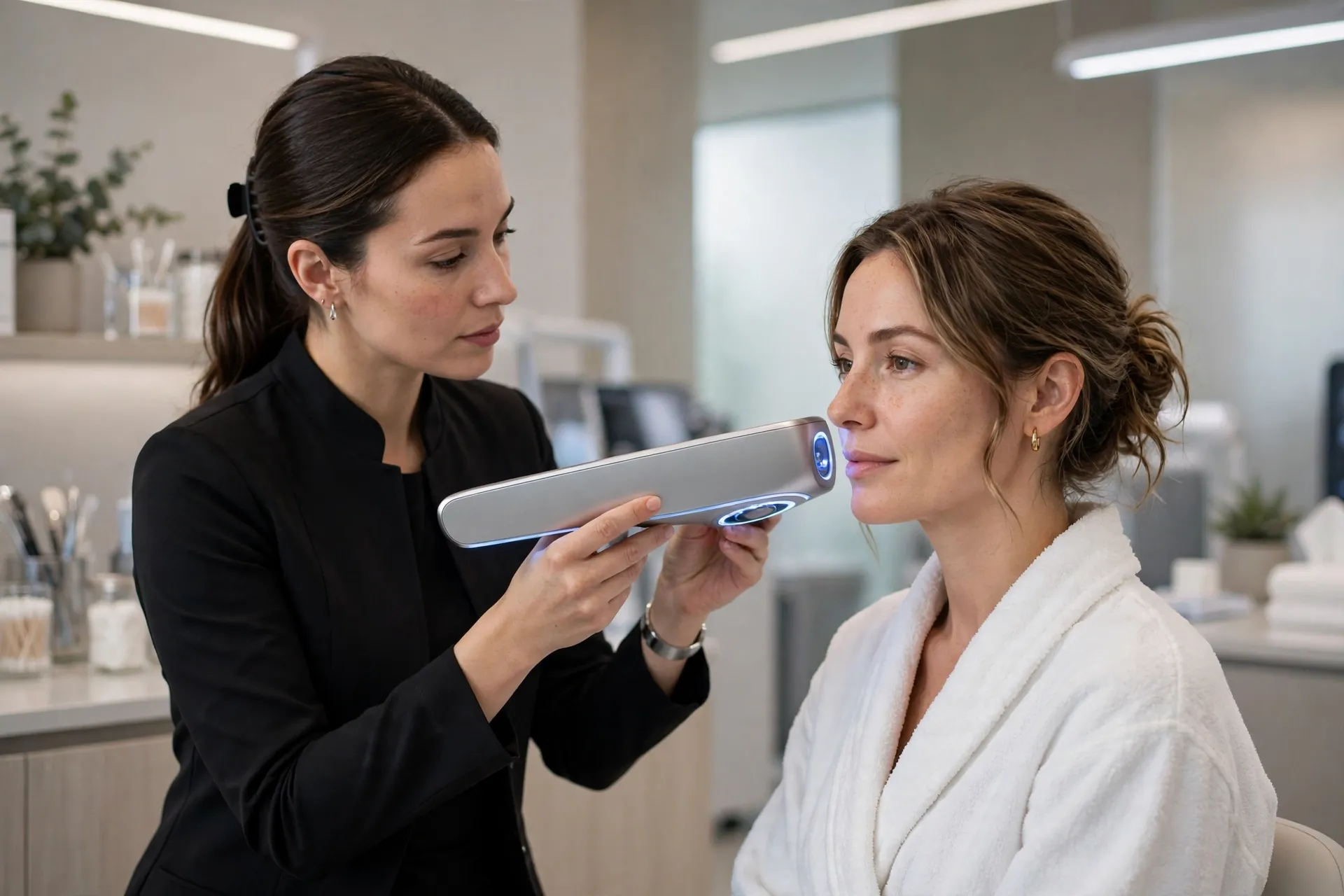
Phone apps are only part of the picture. In stores, you will find counter scanners that use controlled lighting and sometimes polarised or UV imaging, which removes some of the guesswork that affects home selfies. UV imaging in particular can reveal sun-related pigmentation below the surface that ordinary light hides, which is why clinics value it for building long-term treatment plans.
Clinic-grade devices go further still, combining multiple light modes with standardised positioning so that images taken months apart can be honestly compared. That consistency is their real advantage, and it is why a course of treatment monitored by the same device tells a more reliable story than a folder of bathroom selfies. The consumer tools borrow the language of these machines, but not always their discipline, so it is worth knowing which end of the spectrum any given tool sits on before trusting its scores.
Your Face Is Data: The Privacy Question
A facial scan is biometric data, among the most sensitive information you can share. Before using an AI skin analysis tool, it is worth asking where your images go, how long they are stored, whether they are used to train models and whether you can delete them. The same questions we raise in our look at smart beauty mirrors apply here, because many of those devices build this exact technology in.
Under UK data protection law you have rights over this information, including access and deletion. A provider that explains its policy in plain language is signalling that it takes the responsibility seriously. One that buries it is telling you something too.
Using AI Skin Analysis Sensibly
The healthiest way to use AI skin analysis is as one input among several. Let it track change, suggest categories of product and prompt questions. Then apply your own knowledge: how your skin feels, what it reacts to and what your budget allows. Be sceptical of any report whose every recommendation is a product from the same brand, and be wary of alarming scores designed to create urgency.
Used that way, the technology supports exactly the habits that good skincare is built on: observation, patience and consistency, the same foundations we set out in our guide to beauty self care routines that work. The launches and tools arriving in stores, covered in UK beauty industry news, will keep getting more sophisticated. The judgement about what your skin actually needs, though, remains yours, and that is precisely as it should be.