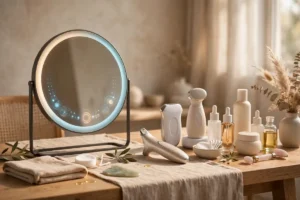
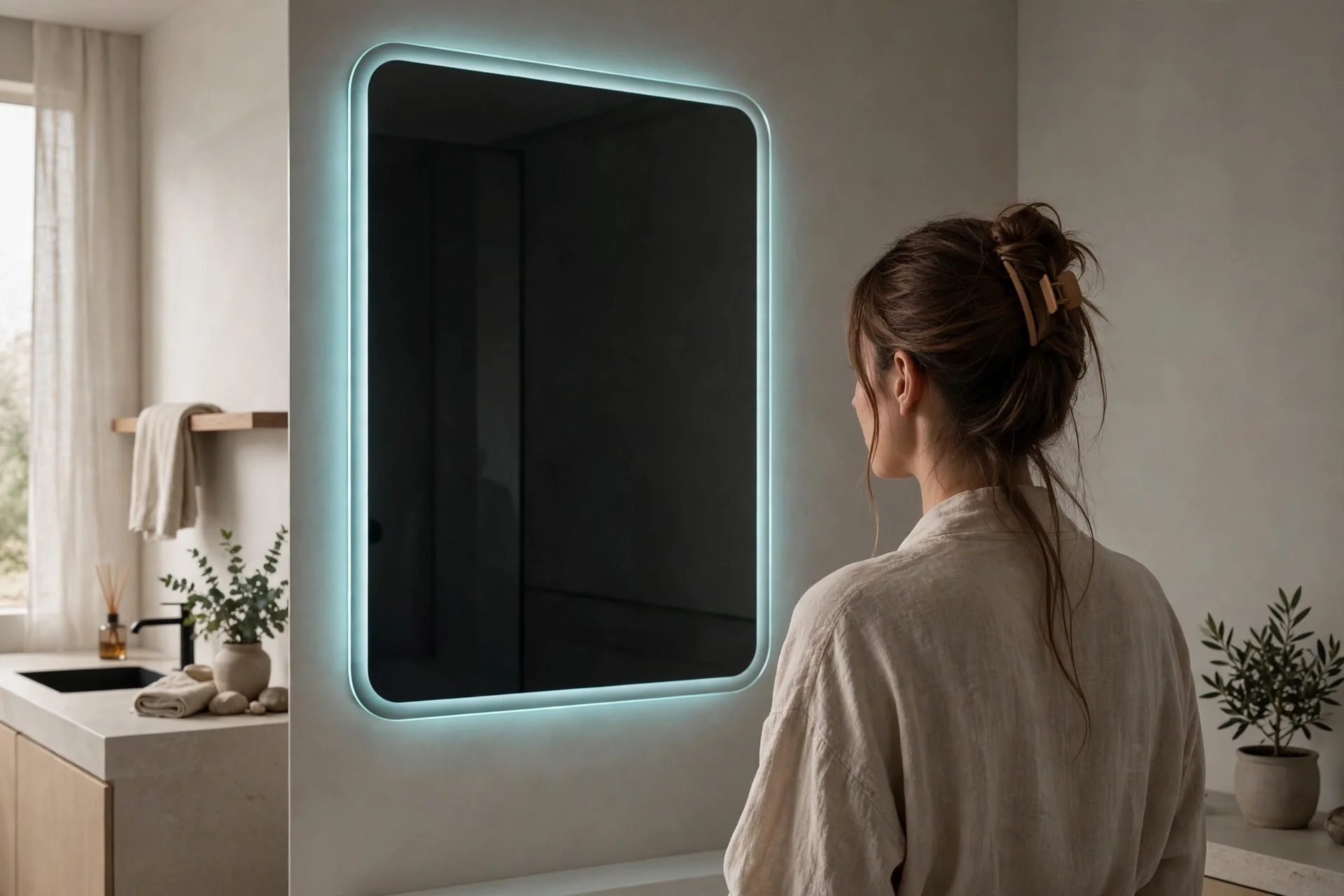
The bathroom mirror is getting smarter. Smart beauty mirrors combine reflective glass with a display, camera, lighting and software, promising skin tracking, better makeup light and guided routines in the space where you already get ready. They sit at the glamorous end of beauty technology, and they attract a fair amount of hype. So what do smart beauty mirrors actually do, and who are they genuinely useful for?
This guide explains the technology in plain terms: the features that matter, the limitations worth knowing and the questions to ask before bringing one into your home.
What Smart Beauty Mirrors Actually Do
At their simplest, smart beauty mirrors are mirrors with adjustable LED lighting. Instead of relying on a bathroom’s overhead light, which flatters nobody, they let you change brightness and colour temperature to simulate daylight, office light or evening conditions. For makeup application alone, this is a real improvement, because colour looks different under each kind of light.
More advanced models add a camera and a screen behind the glass. This allows them to display information while you look at your reflection: the weather, your calendar, a skincare routine checklist or a tutorial video playing beside your face. Some connect to apps on your phone, storing photos of your skin over time so you can compare progress when using a new product. They are part of the wider wave of beauty technology changing British beauty, where the bathroom is slowly becoming a connected space.
Skin Tracking and Guided Routines
The headline feature of premium smart beauty mirrors is skin analysis. Using the built-in camera and software, the mirror assesses visible concerns such as dryness, shine, pigmentation and fine lines, then suggests products or routine steps. Taken regularly under consistent lighting, these snapshots can be genuinely useful: they show change over weeks rather than relying on memory.
Guided routines are the softer benefit. A mirror that displays your morning steps, times a mask or walks you through a tutorial keeps your phone out of the bathroom and your hands free. For people building consistent habits, that quiet prompting can matter more than the analysis itself. It pairs naturally with the routine-building approach in our guide to beauty self care that actually works.
The Limitations Nobody Mentions in the Adverts
Smart beauty mirrors have real constraints. Camera-based skin assessment depends on angle, distance and lighting, and consumer devices are not medical instruments. They can track visible change, but they cannot diagnose anything, and their product recommendations often come from the brand that made the mirror, which is worth remembering when the suggestion is always to buy more.
Privacy deserves thought too. A camera and microphone connected to the internet, in a bathroom, is a serious consideration. Sensible models offer physical camera covers and clear data controls, but you should check how images are stored, whether they leave the device and how long they are kept. Our article on beauty technology privacy concerns covers these questions in more depth, and they apply to every connected beauty device, not just mirrors.
Finally, there is the simple issue of need. A mirror cannot improve a routine you do not have. If your current skincare is inconsistent, money spent on consistency, a cleanser, a moisturiser and sunscreen will do more than any hardware.
Who Benefits Most From a Smart Mirror?
Smart beauty mirrors make the strongest case for keen makeup wearers, content creators and anyone whose bathroom lighting is genuinely poor. Adjustable, accurate light changes how makeup looks more than most products do. They also suit methodical skincare users who enjoy tracking progress and will actually review the data over time.
They make the weakest case as an impulse buy. The novelty features fade quickly, and the models with the most software are also the ones most exposed to apps being discontinued. A well-made lighting-only mirror, with no account and no camera, will still be working in a decade.
Shoppers are getting better at making exactly these judgements. As UK beauty consumer trends show, buyers increasingly research durability, repairability and data practices before purchasing connected devices, and beauty technology is no exception.
Smart Mirrors in Salons, Stores and Hotels
You may meet the technology away from home first. Salons use smart mirrors to show clients style simulations and colour changes before committing, while beauty stores use them for shade matching and virtual try-on at the counter. Hotels have begun installing simpler connected mirrors that combine lighting, weather and local information for guests.
These shared settings are a useful, low-risk way to judge the idea. If trying a shade virtually at a counter delights you, a home version may earn its place. If you find the overlays distracting and the suggestions relentless, you have learned something valuable for free. Commercial models also tend to be more honest demonstrations than adverts, because you can see the camera quality, the screen lag and the lighting with your own eyes rather than through edited footage.
One last practical point: measure your space and your light before ordering anything. A smart mirror hung opposite a window may fight glare all day, and a model that needs a nearby socket is useless in a bathroom without one. The least glamorous checks, dimensions, fixings and power, are the ones that decide whether the mirror becomes a pleasure or a return label.
Questions to Ask Before You Buy
Before choosing a smart beauty mirror, ask five things. Is the lighting adjustable in both brightness and colour temperature? Does the camera have a physical cover, and can the device work with connectivity switched off? Are skin images stored locally or in the cloud, and can they be deleted? Does it need a subscription for its main features? And is the mirror itself good quality glass that you would be happy with if every smart feature vanished tomorrow?
If the answers satisfy you, a smart mirror can be a genuinely pleasant upgrade to a daily ritual. If they do not, a good conventional mirror and honest daylight will serve you just as well. Either way, the goal is the same one behind our guide to sustainable beauty: buy once, buy thoughtfully and use what you own with attention.