

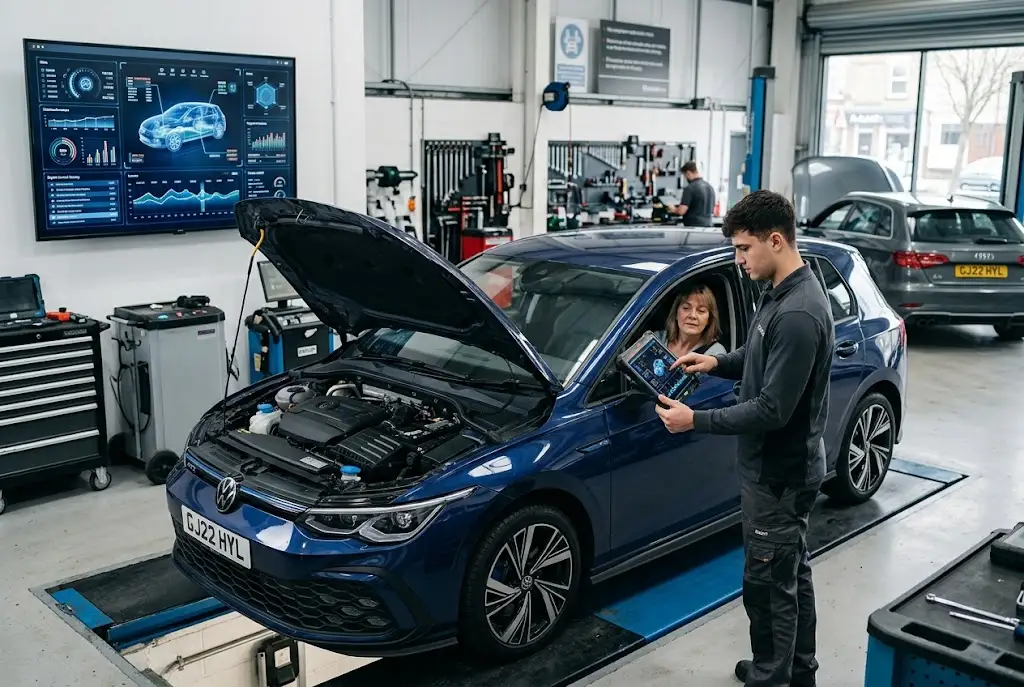
Car servicing has traditionally followed a familiar routine. Drivers book an appointment at a recommended mileage or time interval, a technician checks the vehicle and any necessary maintenance or repairs are carried out. However, advances in vehicle technology are changing this established model.
Modern vehicles can collect information from sensors, electronic control systems and connected components. This is giving manufacturers, garages and drivers access to more information about vehicle condition than ever before. As a result, servicing is gradually becoming more data-driven, proactive and personalised.
The change is not simply about replacing traditional garages with technology. Instead, the future of vehicle servicing is likely to combine experienced technicians with connected diagnostics, digital service records, predictive maintenance and better communication with vehicle owners.
Why Car Servicing Is Becoming More Technology-Driven
Vehicles have become significantly more sophisticated. A modern car can contain numerous electronic systems that continuously monitor performance, temperature, pressure, emissions and other operating conditions.
Previously, many maintenance decisions depended heavily on mileage, time and what a technician discovered during a physical inspection. Those factors remain important, but connected technology can provide additional information about how a vehicle is being used and how its systems are performing.
This creates the foundation for a different approach to car servicing. Rather than treating every vehicle according to exactly the same timetable, future servicing systems may increasingly consider the individual vehicle’s condition and usage.
For drivers, that could eventually mean more relevant maintenance recommendations and earlier warnings about developing issues.
From Fixed Schedules to Predictive Maintenance
Traditional maintenance schedules provide an important framework for keeping vehicles in good condition. They help drivers remember when routine checks and servicing are due, while giving technicians a structured way to inspect important components.
However, a fixed schedule cannot capture every difference between vehicles. Two cars with the same mileage may have experienced very different driving conditions.
Predictive maintenance offers a more data-driven approach. Instead of relying exclusively on time or mileage, predictive systems can analyse available vehicle information to identify patterns that could indicate a developing problem.
This does not mean a vehicle can predict every failure with certainty. Rather, predictive analytics can provide another layer of information that helps technicians decide what deserves closer attention.
Over time, this could make vehicle servicing more proactive and potentially reduce the likelihood of unexpected mechanical problems.
How Connected Diagnostics Are Changing Servicing
Connected diagnostics are becoming increasingly important as vehicles gain more communication and monitoring capabilities. Diagnostic information can give technicians insight into electronic systems before and during a workshop visit.
This can improve the initial assessment of a vehicle. When a driver reports a warning light or unusual behaviour, diagnostic information may help narrow down the areas that require investigation.
Connected diagnostics could also improve workshop preparation. If a garage has useful information before an appointment, technicians may have more time to identify the likely cause, prepare suitable equipment and determine whether additional inspection is required.
For customers, this could contribute to a smoother service experience. Instead of starting from scratch when the vehicle arrives, the garage may already have useful information about the reported issue.
Full Car Service, Interim Service and Major Service
Although technology is changing how vehicles are monitored, established servicing options continue to have an important role.
An interim service is generally intended for vehicles that need maintenance between more comprehensive service intervals. It can be particularly relevant for drivers who cover high annual mileage or follow manufacturer-recommended servicing schedules that require more frequent attention.
A full car service is more comprehensive and typically involves checking a wider range of components and systems. The exact work included can vary depending on the vehicle, manufacturer requirements and service provider.
A major service can involve additional inspections and replacement items compared with routine servicing. Again, the exact requirements depend on the vehicle and its maintenance schedule.
Technology does not remove the need for these service categories. Instead, digital diagnostic information can potentially complement the physical checks that technicians already perform.
Consumer Behaviour Is Influencing Service Evolution
The evolution of car servicing is not being driven by vehicle technology alone. Consumer expectations are changing as well.
People are increasingly accustomed to booking services online, receiving digital notifications and managing everyday tasks through mobile devices. Those expectations are naturally extending into vehicle ownership.
Drivers may want to book a garage appointment without making a phone call, receive reminders digitally, approve recommended work remotely and access service information electronically.
Convenience is therefore becoming an important part of the modern service experience. A technically excellent workshop can still benefit from making its customer journey easy to understand and simple to manage.
This is one reason digital garages are becoming more relevant within the wider evolution of automotive services.
Digital Service Records and Digital Ownership
Paper service books have long been used to document vehicle maintenance. Digital systems offer another way to organise this information.
A digital service record can potentially make maintenance history easier to access, update and share. For drivers, having a clear record can make it easier to understand what work has previously been completed and what may be due next.
Digital ownership can also become useful when a vehicle changes hands. A well-maintained record of servicing and repairs can provide useful context for future owners, subject to the systems and data access arrangements involved.
As more vehicle information moves into digital systems, service history is likely to become increasingly integrated with other aspects of vehicle management.
What Technology Means for Garage Technicians
It would be easy to assume that more technology means less need for skilled technicians. In reality, the opposite may be true.
Modern vehicles can generate large amounts of diagnostic information, but interpreting that information still requires expertise. A fault code does not necessarily identify the complete cause of a problem. Technicians may need to test components, inspect physical systems and understand how different vehicle systems interact.
The role of the technician is therefore evolving. Alongside traditional mechanical knowledge, modern workshops increasingly need diagnostic skills and familiarity with electronic systems and automotive technology.
This combination of practical expertise and digital capability will be particularly important as connected and software-dependent vehicles become more common.
How Car Servicing Could Become More Personalised
One of the most interesting possibilities is a move towards more personalised servicing recommendations.
Instead of considering only the age and mileage of a vehicle, future systems could potentially take account of driving patterns, operating conditions, diagnostic information and previous maintenance.
For example, a vehicle used primarily for short urban journeys may experience different conditions from one that spends most of its time on motorways. Data-driven systems could help identify relevant maintenance considerations without treating every vehicle in exactly the same way.
This does not mean drivers should ignore manufacturer guidance. Recommended maintenance schedules remain an important reference point. Rather, additional vehicle information could help technicians identify areas that deserve attention alongside those scheduled requirements.
The Link Between Servicing and Modern Vehicle Maintenance
Servicing is only one part of maintaining a vehicle. Regular inspections, tyre checks, fluid checks, brake inspections and attention to warning signs all contribute to safe and reliable vehicle operation.
That broader approach is becoming increasingly important as vehicles become more complex. Drivers who want to understand the wider maintenance picture can explore vehicle maintenance and the role of preventive and predictive approaches.
When an actual fault develops, servicing and repair can also overlap. Modern auto repair services increasingly rely on diagnostic technology to investigate electronic and mechanical problems efficiently.
The same technological shift is influencing inspections and testing. The future of MOT and service processes is likely to involve increasingly sophisticated digital equipment and vehicle information.
These developments all form part of a wider transformation in auto services, where connected vehicles and digital systems are becoming more important to the customer and workshop experience.
What Drivers Should Expect Next
The future of car servicing is likely to be more connected, but the basic purpose will remain the same: keeping vehicles safe, reliable and properly maintained.
Drivers can expect technology to make some parts of servicing more convenient. Digital bookings, electronic service records, connected diagnostics and automated reminders can reduce friction around routine maintenance.
At the same time, predictive technologies may help identify potential issues earlier. This could encourage a gradual shift from reacting to failures towards planning maintenance based on better information.
However, technology should support rather than replace professional judgement. Physical inspections, manufacturer recommendations and qualified technical expertise will remain essential.
The Future of Car Servicing
Car servicing is changing because vehicles themselves are changing. Connected systems, advanced diagnostics, predictive maintenance and digital ownership are creating new ways to understand and manage vehicle condition.
The traditional service appointment is unlikely to disappear overnight. Instead, it is becoming part of a broader digital ecosystem in which information can move between vehicles, drivers and workshops more efficiently.
For drivers, the biggest opportunity is a more informed and convenient ownership experience. For garages, the challenge is to combine new technology with the practical skills that have always made professional vehicle care valuable.
As automotive technology continues to develop, servicing will increasingly become less about simply responding to problems and more about understanding vehicle condition before those problems become disruptive. That shift could make vehicle ownership more predictable while giving technicians better tools to keep modern cars operating safely and efficiently.
