Vehicle maintenance is entering a new era. For years, keeping a car in good condition has largely depended on scheduled servicing, mileage intervals, routine inspections and the driver’s ability to recognise warning signs. Those fundamentals remain important, but modern vehicles are introducing new ways to monitor condition and identify potential problems.
Today’s cars contain sophisticated sensors, electronic control systems and software that can monitor many aspects of vehicle operation. As these technologies become more capable, maintenance is moving towards a more connected and data-driven model.
The result is a gradual shift from simply maintaining a vehicle according to a fixed timetable towards understanding its actual condition. Preventive maintenance, AI diagnostics, vehicle monitoring and predictive analytics could all play a larger role in how drivers and garages approach vehicle care.
Why Vehicle Maintenance Is Changing
Modern cars are considerably more complex than many older vehicles. Mechanical components still play a central role, but they now operate alongside electronic systems and software that continuously collect information.
This creates opportunities for vehicle maintenance to become more proactive. Instead of relying entirely on a scheduled inspection to discover an issue, connected systems can potentially provide earlier indications that something may require attention.
That does not make traditional servicing unnecessary. Regular inspections and manufacturer maintenance schedules remain important. Technology simply adds another layer of information that can help drivers and technicians make better-informed decisions.
The wider transformation also reflects the changing nature of vehicle ownership. Drivers increasingly expect digital tools, convenient communication and easy access to information. Vehicle maintenance is becoming part of that broader digital ownership experience.
Preventive Maintenance Still Matters
Preventive maintenance is based on a simple principle: address maintenance needs before they develop into more serious problems.
Regularly checking tyres, brakes, fluids, lights, suspension components and other important systems can help identify wear before it becomes a major issue. Following the manufacturer’s recommended maintenance schedule is also an important part of responsible vehicle ownership.
Technology can strengthen this approach rather than replace it. Digital reminders can help drivers keep track of appointments, while diagnostic systems can provide additional information during inspections.
As a result, preventive maintenance is likely to remain a foundation of modern vehicle care even as more advanced technologies become available.
From Maintenance Schedules to Condition-Based Care
Maintenance schedules are useful because they provide clear guidance about when particular checks or servicing tasks should be considered. However, vehicles do not all experience identical conditions.
A car that spends most of its time in urban traffic can experience different operating conditions from one that regularly travels long distances. Driving habits, climate, road conditions and annual mileage can also influence how components are used.
This is where condition-based maintenance becomes interesting. Instead of considering only time or mileage, maintenance decisions can potentially incorporate information about the vehicle’s actual operating condition.
Connected monitoring systems may eventually help identify trends in areas such as component performance or system behaviour. This could allow technicians to investigate potential concerns before they become obvious to the driver.
Such an approach does not eliminate scheduled maintenance. Instead, it can complement established maintenance schedules with additional vehicle-specific information.
How AI Diagnostics Could Improve Vehicle Care
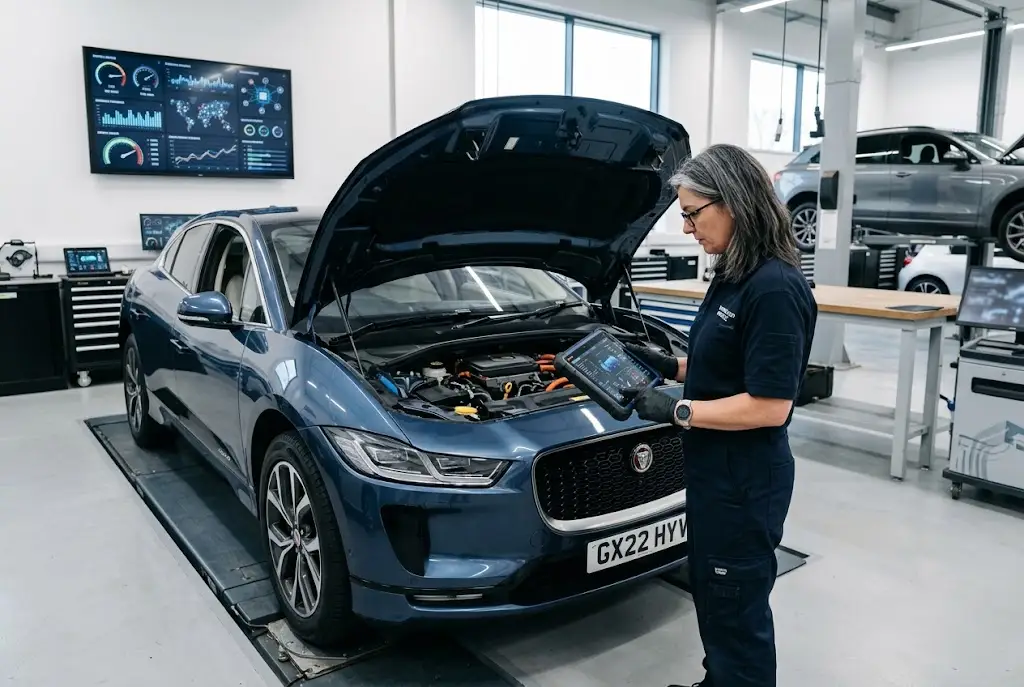
AI diagnostics are becoming an increasingly important part of automotive technology. Modern vehicles can produce substantial amounts of technical information, and software can help organise and analyse that information.
AI-based diagnostic systems may identify patterns across multiple data points and help technicians determine where further investigation is appropriate. This can potentially reduce the time needed to narrow down certain faults.
However, diagnostic software should not be viewed as a replacement for professional expertise. A diagnostic result may identify an area of concern, but a technician still needs to inspect the vehicle and establish the actual cause.
The most effective approach is therefore likely to combine intelligent software with practical mechanical knowledge. As vehicles become more sophisticated, technicians who can work confidently with both physical components and digital systems will become increasingly valuable.
Smart Servicing and Connected Garages
The future of vehicle maintenance is also closely connected to the development of smart servicing and connected garages.
A connected garage can use digital systems to manage appointments, customer records, diagnostic information and inspection results. These tools can improve workshop organisation while giving customers a clearer view of what is happening with their vehicle.
For example, a digital inspection may allow a technician to document an issue with photographs or other supporting information. A customer can then review the recommendation before deciding whether additional work is required.
Connected systems can also improve communication. Service reminders, appointment confirmations and maintenance updates can be delivered digitally rather than relying entirely on traditional phone calls or paper documentation.
This is part of the broader transformation already affecting car servicing, where technology is changing how maintenance information is collected and communicated.
Vehicle Monitoring Could Become More Continuous
One of the biggest differences between traditional maintenance and future vehicle care could be the frequency with which vehicle condition is monitored.
Historically, a vehicle might receive a detailed professional inspection only during a service or when a problem was reported. Connected vehicles can potentially provide information more frequently.
Continuous or regular vehicle monitoring could help identify unusual patterns before a driver notices a significant change. Depending on the technology available, this might provide useful information about system performance, warnings or potential maintenance requirements.
For drivers, the advantage is greater visibility. Rather than thinking about maintenance only when a service is due, vehicle condition could become an ongoing part of digital ownership.
Nevertheless, monitoring technology has limits. Not every developing mechanical problem can be detected remotely, and physical inspections will continue to be necessary for many maintenance tasks.
The Role of Predictive Analytics
Predictive analytics could take vehicle monitoring a step further by analysing historical and current information to identify patterns associated with potential problems.
The concept is already familiar in other industries, where data is used to identify unusual behaviour and support preventative action. In automotive applications, similar principles could help workshops understand whether a vehicle’s data indicates that a component deserves closer attention.
Predictive maintenance should not be confused with certainty. A prediction is an indication that further investigation may be useful, not a guarantee that a component will fail.
When used appropriately, however, predictive analytics could help garages prioritise inspections and give drivers more information about possible future maintenance needs.
What Is Predictive Maintenance?
Predictive maintenance uses available data to identify patterns or conditions that may indicate a developing problem. Rather than waiting for a component to fail completely, a predictive system attempts to provide an earlier indication that inspection or maintenance may be appropriate.
The concept is already familiar in other industries where equipment is monitored continuously. Automotive technology applies similar principles to vehicles by using sensor information, diagnostic data and analytical software.
Predictive maintenance should not be interpreted as a guarantee that a system can predict every mechanical failure. Components can deteriorate in different ways, sensors can have limitations and unexpected damage can occur without a clear digital warning. Instead, predictive technology provides another source of information that can support maintenance decisions.
Maintenance Analytics and Vehicle Data
Maintenance analytics brings together information from servicing, inspections, diagnostic systems and vehicle operation. When this information is organised effectively, it can provide useful insights into recurring problems and maintenance requirements.
For individual drivers, analytics may help create a clearer history of vehicle servicing. For businesses operating multiple vehicles, the potential value can be even greater because fleet managers can analyse patterns across many vehicles.
This For example, repeated issues involving similar vehicle models or operating conditions may become easier to identify when maintenance records are structured digitally. This can support decisions about servicing schedules, workshop planning and vehicle replacement.
Analytics should still be interpreted carefully. A pattern in historical data does not automatically prove that the same outcome will occur in every vehicle. Context remains important, particularly when vehicles have different ages, mileage levels, operating environments and maintenance histories.
How Predictive Maintenance Could Change Garage Visits
Traditional garage visits often begin with a customer describing a symptom or requesting routine servicing. Predictive maintenance could gradually change this process by giving workshops additional information before the vehicle arrives.
A service team may be able to review relevant information, identify areas for inspection and prepare suitable equipment before the appointment. This could make the initial diagnostic stage more structured.
It may also improve communication. Rather than simply telling a customer that a component needs attention, a workshop could explain what information prompted the recommendation and what physical checks are required to confirm it.
This kind of transparency can strengthen the relationship between customers and workshops while helping drivers make more informed maintenance decisions.
Predictive Maintenance for Fleets
Fleet operators have particular reasons to explore predictive vehicle maintenance. When a business depends on multiple vehicles, unexpected downtime can disrupt schedules and increase operating costs.
Digital monitoring can potentially help fleet managers identify vehicles that require attention and plan workshop visits around operational requirements. Maintenance analytics can also reveal recurring patterns across a fleet.
However, fleet operators still need to follow appropriate manufacturer servicing requirements. Predictive information can support fleet planning, but it should not be used as a reason to ignore scheduled maintenance.
The Importance of Reliable Automotive Data
Digital maintenance depends on the quality of the information being used. Poor data can produce misleading conclusions, while incomplete information may prevent a system from identifying an emerging issue.
Data security is another consideration. Connected vehicles and digital workshop platforms can involve technical and customer information that needs to be handled appropriately.
The UK’s automotive environment is also evolving around access to vehicle repair and maintenance information. Government policy work has considered standardised access to on-board diagnostic information and repair and maintenance data, reflecting the growing importance of digital information within the automotive service sector.
Digital Ownership and Service History
Digital ownership is another important part of the changing maintenance landscape. Vehicle owners increasingly expect information to be available electronically, and service history is no exception.
Digital records can make it easier to keep track of completed maintenance and future requirements. They may also make information easier to share with garages or future owners, depending on the systems involved.
A well-organised digital history can provide useful context when a vehicle requires attention. A technician may be able to see what maintenance has previously been carried out rather than relying entirely on the customer’s memory or paper documents.
Over time, digital records could become increasingly integrated with diagnostic systems, servicing platforms and other vehicle-management tools.
Maintenance Technology and Electric Vehicles
The growth of electric and hybrid vehicles is also influencing maintenance technology. These vehicles have different powertrain designs and introduce components that require specialised knowledge.
High-voltage systems, batteries, electric motors and sophisticated electronic controls create new technical requirements for workshops. At the same time, some maintenance tasks associated with conventional combustion engines are no longer relevant to fully electric vehicles.
However, electric vehicles still require attention to tyres, brakes, steering, suspension, cooling systems and other components. Software and electronics also create their own diagnostic requirements.
This means the future of vehicle maintenance will not simply be about doing less maintenance. It will be about maintaining different technologies and using better information to understand their condition.
What This Means for Drivers
For drivers, smarter maintenance could make vehicle ownership more predictable and convenient.
Digital reminders can make it easier to stay on top of scheduled maintenance. Connected diagnostics can provide technicians with additional information. Predictive tools may eventually help identify potential concerns before they develop into unexpected breakdowns.
However, drivers should not rely entirely on technology. Warning messages should not be ignored, and manufacturer guidance should continue to form an important part of maintenance planning.
Drivers should also understand that connected vehicle technology involves data. As digital ownership expands, questions about how vehicle information is collected, stored and shared will become increasingly important.
How Vehicle Maintenance Connects With Modern Auto Services
The changes taking place in maintenance are part of a much larger transformation across the automotive sector. The future of auto services will increasingly involve connected vehicles, digital garages, advanced diagnostics and smarter customer experiences.
When a vehicle develops a fault, the same technologies can support modern auto repair services. Digital diagnostics can help technicians investigate problems while software tools become increasingly important in modern workshops.
Routine servicing is also evolving. Understanding car servicing as part of a wider maintenance strategy can help drivers see how scheduled checks, preventive care and emerging predictive technologies fit together.
Testing and compliance are changing alongside maintenance. Developments surrounding MOT and service processes show how digital inspection and connected vehicle technology can influence other parts of vehicle ownership.
The Future of Vehicle Maintenance
Vehicle maintenance is moving towards a more connected and intelligent model. Preventive maintenance and scheduled servicing will remain important, but they can increasingly be supported by vehicle monitoring, AI diagnostics, predictive analytics and digital records.
The biggest change may be the move from reacting to obvious faults towards identifying potential issues earlier. Better information can help drivers understand their vehicles and give technicians additional tools for making maintenance decisions.
Even so, the fundamentals of responsible vehicle care will not disappear. Cars still need inspections, worn components still need replacing and safety-critical systems still require professional attention.
The future is therefore not about technology replacing the garage. It is about technology making the garage smarter, giving technicians better information and helping drivers take a more proactive approach to vehicle care.
As connected vehicles and automotive software continue to develop, maintenance will become an increasingly integrated part of digital vehicle ownership. For drivers and workshops alike, the most valuable development will be a combination of better technology, reliable information and skilled human expertise.