MOT and service processes are entering a period of technological change. The basic purpose of an MOT remains focused on vehicle roadworthiness and environmental standards, but the vehicles being tested are becoming increasingly connected, software-driven and electronically sophisticated.
Modern cars can contain advanced driver assistance systems, numerous sensors, electronic control units and communication technologies. As a result, vehicle testing needs to evolve alongside the technology found inside the vehicles themselves.
Digital inspections, connected diagnostics, smarter testing equipment and vehicle monitoring are all contributing to this evolution. In the UK, the Driver and Vehicle Standards Agency (DVSA) is already researching what a future MOT could look like, including how connected vehicles may affect inspection processes.
Why MOT and Service Processes Are Changing
The traditional MOT test remains an important part of UK vehicle ownership. It checks specific components and systems against legal standards, helping determine whether a vehicle meets the required roadworthiness and environmental requirements.
However, modern vehicles increasingly depend on technology that was not present when the MOT system was originally established. Driver assistance systems, sophisticated electronic controls and connected vehicle technologies create new questions about how vehicles should be inspected in the future.
The DVSA’s current business planning specifically includes research towards creating the MOT of the future, with connected vehicles identified as an area of focus.
This does not mean the existing MOT is being replaced by a fully digital test overnight. Instead, it shows that the testing system needs to remain relevant as vehicle technology develops.
What an MOT Actually Checks
An MOT is a legal test designed to check important parts of a vehicle against required standards. The test covers areas such as vehicle structure, bodywork, wheels and tyres, lights, brakes, steering and other relevant components.
It is important to understand that an MOT is not the same as a full mechanical service. For example, the official government guidance states that the MOT does not cover the condition of the engine, clutch or gearbox.
This distinction matters because passing an MOT does not mean that a vehicle is mechanically perfect. A car can pass its MOT while still requiring routine servicing or maintenance.
That is why combining appropriate maintenance with regular testing remains an important part of responsible vehicle ownership.
Digital Inspections Are Already Part of the MOT System
The MOT process is already supported by digital technology. MOT test results are recorded electronically, creating a digital record that can be accessed through the official MOT history service.
The DVSA’s MOT testing guidance states that an electronic record is created for every MOT and that this electronic record forms the legal record of the test.
For drivers, this makes it easier to check previous MOT results and understand a vehicle’s testing history. It also gives the testing system a structured source of information that can support administration, oversight and future improvements.
Digital records can also improve transparency. Instead of relying entirely on a paper certificate kept by the vehicle owner, important test information is stored within the official system.
Connected Diagnostics Could Influence Future Testing
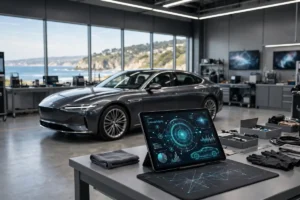
Connected diagnostics could become one of the most significant developments in future MOT testing.
Modern vehicles can generate information about their own systems. Sensors and electronic control units can monitor many aspects of vehicle operation, creating data that may potentially be useful during inspections.
The DVSA has identified connected vehicles as a specific area of research for the future MOT. Its current plans include developing a proof of concept around what may be possible and identifying the systems and conditions needed to make such approaches work safely and effectively.
This could eventually give testers additional information when assessing technologically advanced vehicles.
However, connected diagnostics should complement rather than automatically replace physical inspection. A vehicle’s digital data cannot necessarily reveal every mechanical, structural or physical condition that an MOT tester needs to assess.
Smart Testing for Modern Vehicles
As vehicles become more sophisticated, smart testing could help MOT centres keep pace with new technologies.
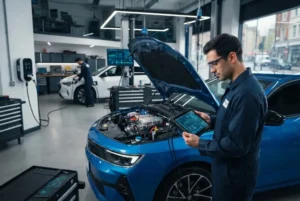
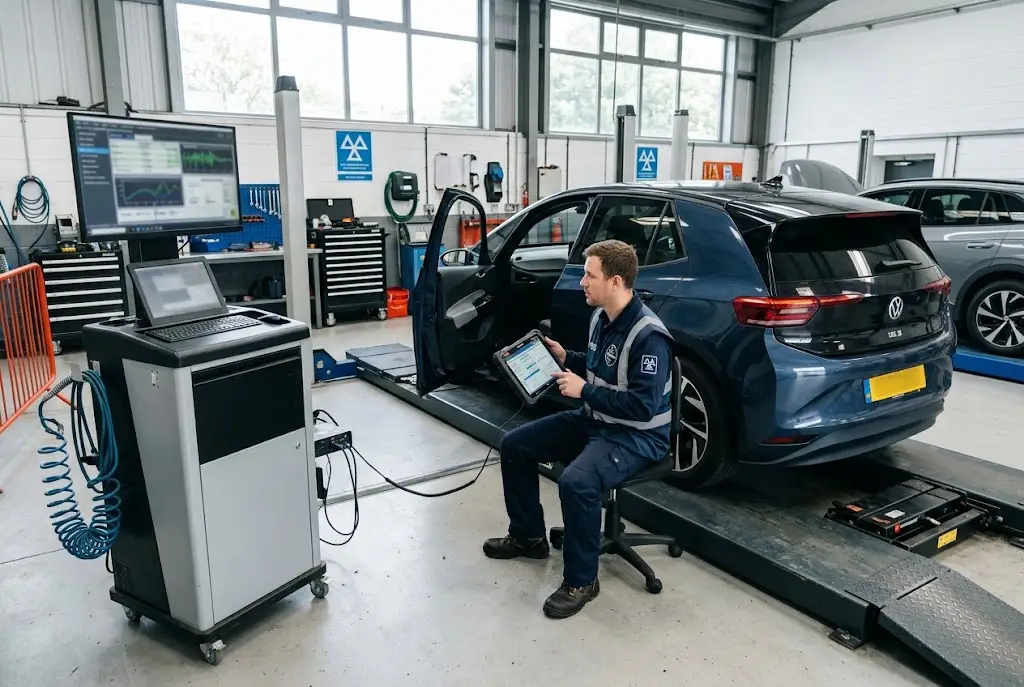
Testing equipment may need to communicate more effectively with modern vehicle systems. Diagnostic equipment can already provide technicians and testers with information that would not have been available on older vehicles.
The challenge is ensuring that any technology used in testing is accurate, secure and appropriate for the specific inspection being carried out.
The DVSA has previously highlighted investment in connected test equipment and the need to modernise testing as vehicle technology changes. Its plans have also explored how technology and automation can make MOT testing more efficient while providing better information to customers.
Future MOT centres may therefore look increasingly different from traditional testing facilities, with more digital equipment working alongside established inspection methods.
Artificial Intelligence and MOT Innovation
Artificial intelligence could eventually support certain parts of the testing process, although its role needs to be carefully defined.
The DVSA has previously explored whether AI could help testers during MOTs. It has also looked at using image capture and vehicle data as part of efforts to improve testing and identify potentially fraudulent activity.
AI could potentially help analyse information, identify unusual patterns or support testers when dealing with complex vehicle systems.
However, an MOT is a regulated safety-related process. Any AI system would therefore need to operate within appropriate technical, legal and quality controls.
The most realistic future is likely to involve AI supporting trained professionals rather than making independent decisions without human oversight.
Vehicle Monitoring Could Support Road Safety
Vehicle monitoring is another technology that could become increasingly relevant to future testing.
Connected vehicles can potentially provide information about how their systems are operating. If that information can be collected and interpreted appropriately, it could give regulators and testing professionals additional insight into vehicle condition.
The potential road safety benefits are significant, but data quality and reliability are critical. A digital signal is useful only when it accurately represents the condition of the vehicle.
Privacy and security also need consideration. Connected vehicle systems can generate information about vehicles and their use, so any future testing model involving vehicle data would need clear rules about access, handling and protection.
MOT and Service Are Not the Same Thing
Drivers often search for an MOT and service together, but the two processes have different purposes.
The MOT is a regulated test that checks whether specified aspects of a vehicle meet legal standards at the time of testing. A service is a broader maintenance activity designed to help keep the vehicle operating properly.
A service may involve checking or replacing items according to the vehicle manufacturer’s recommendations and assessing components that are outside the scope of the MOT.
This distinction is particularly important because an MOT pass does not remove the need for routine maintenance. Government guidance confirms that an MOT focuses on specific tested areas and does not assess everything that can affect a vehicle’s mechanical condition.
Drivers looking at the wider maintenance picture can learn more about car servicing and how routine servicing is changing through digital diagnostics and predictive technologies.
Why Regular Vehicle Maintenance Still Matters
Technology does not eliminate the need for basic vehicle care. Tyres still need appropriate attention, brakes still require inspection and fluids, lights, steering and other systems still need to be maintained.
In fact, the increasing complexity of vehicles makes good maintenance habits more important.
Modern vehicle maintenance combines traditional preventive care with increasingly sophisticated diagnostic and monitoring technology.
If a fault is identified during an inspection or develops between MOT tests, professional auto repair services may be required to investigate and resolve it.
All of these activities form part of the wider auto services ecosystem, where testing, maintenance, diagnostics and repair increasingly overlap through digital information.
What a Digital MOT Could Mean for Drivers
The gradual move towards smarter testing could make vehicle ownership more convenient in several ways.
Digital records already make it easier to check MOT history. Future technologies could potentially improve how testing information is collected, interpreted and communicated.
Drivers may eventually receive clearer information about technologically advanced vehicle systems, while testing centres could have access to better tools for assessing modern vehicles.
There could also be benefits for road safety. The DVSA’s long-term vision recognises the need for MOT testing and in-service vehicle safety to keep pace with technologies such as artificial intelligence, radar, lidar and connected vehicles.
However, future changes will need to balance innovation with reliability, fairness and clear regulatory standards.
How Electric and Connected Vehicles Affect MOT Testing
Electric and connected vehicles are particularly relevant to the future of testing because they introduce technologies that differ from traditional petrol and diesel vehicles.
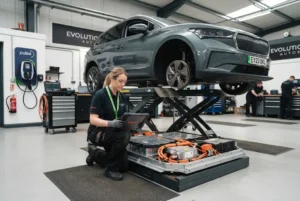
Electric vehicles have high-voltage electrical systems, batteries and electric drivetrains. Connected vehicles may also contain sophisticated communication and driver assistance technologies.
As these technologies become more common, testing methods need to remain relevant to the risks and systems found in newer vehicles.
The DVSA has stated that it is working to modernise vehicle inspection services and respond to advances in connected and automated vehicles as part of its wider technology work.
This suggests that the future MOT will need to evolve alongside the vehicles it is designed to assess.
The Future of MOT and Service
MOT and service processes are becoming increasingly connected to the wider digital transformation of the automotive industry.
Digital inspection records, connected diagnostics, smart testing equipment, AI-assisted systems and vehicle monitoring could all influence how vehicles are tested in the future.
Yet the central purpose will remain familiar: helping ensure vehicles meet the appropriate safety and environmental standards while supporting a roadworthy vehicle fleet.
The future is therefore unlikely to be about technology replacing MOT testers. Instead, technology can provide testers with better information and tools while trained professionals continue to make important inspection decisions.
For drivers, the best approach remains straightforward. Keep the vehicle properly maintained, follow relevant servicing recommendations, check MOT status and address problems when they arise. A digital MOT may become more sophisticated over time, but responsible vehicle ownership will continue to depend on both technology and good maintenance habits.
As connected vehicles become more widespread, the MOT system will have to adapt to a new generation of automotive technology. The UK’s ongoing work towards the MOT of the future shows that this evolution has already begun.