Vehicle maintenance is changing as connected vehicles, smart diagnostics and artificial intelligence become more closely integrated with modern automotive systems. Traditional servicing has often followed fixed schedules or responded to visible problems, but digital technology is creating opportunities to monitor vehicle condition more continuously. Predictive maintenance can help identify patterns that may deserve attention before they become more serious issues.
This shift does not mean routine servicing is disappearing. Instead, digital maintenance is adding another layer of information to the relationship between drivers, vehicles and workshops. By combining vehicle monitoring, maintenance analytics and professional inspection, modern servicing can become more informed and potentially more proactive.
Why Vehicle Maintenance Is Becoming More Data-Driven
Modern vehicles contain numerous sensors and electronic control systems that monitor different aspects of vehicle operation. Depending on the vehicle, these systems can generate information relating to engine performance, braking, temperature, battery condition, emissions and other operating parameters.
Historically, much of this information was primarily used by the vehicle itself to operate systems or alert the driver when something required attention. Increasing connectivity means more vehicle information can potentially be used within broader servicing processes.
This creates a shift from maintenance based solely on time or mileage towards maintenance that can also consider vehicle condition and usage patterns. The two approaches do not necessarily compete. Scheduled servicing remains important, while digital information can provide additional insight between service intervals.
What Is Predictive Maintenance?
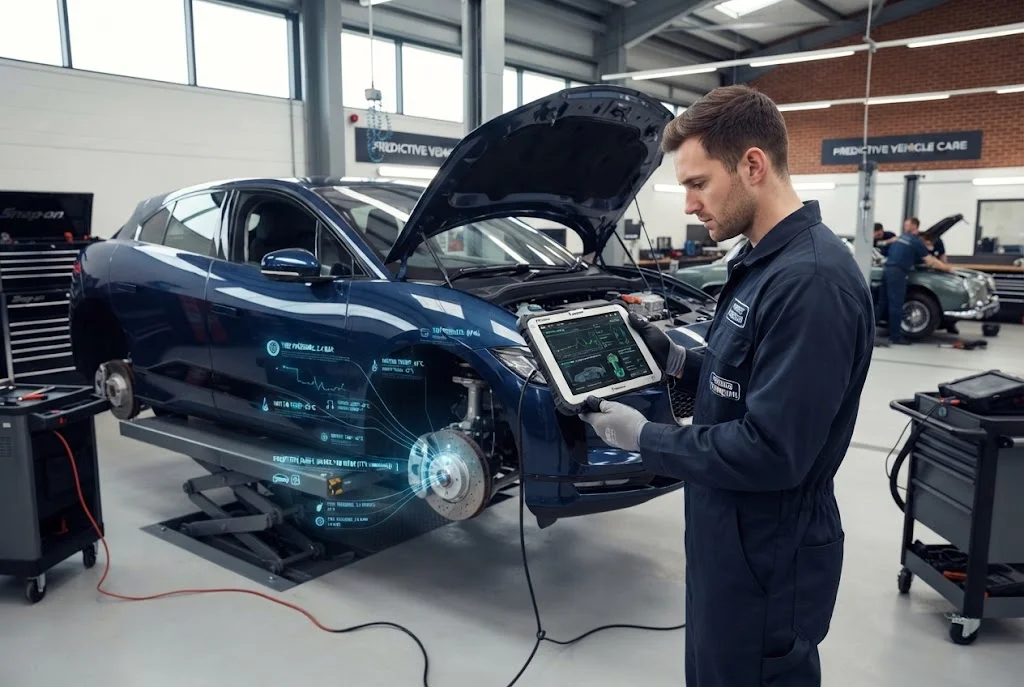
Predictive maintenance uses available data to identify patterns or conditions that may indicate a developing problem. Rather than waiting for a component to fail completely, a predictive system attempts to provide an earlier indication that inspection or maintenance may be appropriate.
The concept is already familiar in other industries where equipment is monitored continuously. Automotive technology applies similar principles to vehicles by using sensor information, diagnostic data and analytical software.
Predictive maintenance should not be interpreted as a guarantee that a system can predict every mechanical failure. Components can deteriorate in different ways, sensors can have limitations and unexpected damage can occur without a clear digital warning. Instead, predictive technology provides another source of information that can support maintenance decisions.
How Connected Vehicles Support Smarter Maintenance
Connected vehicles can play an important role in the development of digital maintenance. A connected vehicle can potentially transmit selected technical information through appropriate systems, creating opportunities for remote monitoring and more informed servicing.
For workshops, access to relevant information before a vehicle arrives can potentially improve preparation. A technician may have more context about a reported issue, while service teams can organise appointments around the information available.
For drivers, connected servicing can make maintenance feel less reactive. Instead of discovering a problem only after a warning becomes obvious, the vehicle’s available data may help highlight an issue that warrants further investigation.
The broader development of connected servicing is closely related to the smart garage revolution, where digital booking, workshop automation and connected technology increasingly work together.
Smart Diagnostics and Modern Vehicle Maintenance
Smart diagnostics are becoming increasingly important because modern vehicles contain complex electronic systems. A conventional visual inspection may identify obvious physical problems, but electronic faults often require specialised diagnostic equipment.
Diagnostic systems can read information from vehicle control units and identify stored fault codes or unusual readings. More advanced systems can help technicians interpret larger amounts of information and investigate relationships between different symptoms.
AI technology can potentially assist with this process by identifying patterns across datasets. However, AI-generated recommendations still need to be evaluated by qualified professionals. A diagnostic system can point towards an area requiring investigation, but the technician remains responsible for confirming the physical condition of the vehicle.
Maintenance Analytics and Vehicle Data
Maintenance analytics brings together information from servicing, inspections, diagnostic systems and vehicle operation. When this information is organised effectively, it can provide useful insights into recurring problems and maintenance requirements.
For individual drivers, analytics may help create a clearer history of vehicle servicing. For businesses operating multiple vehicles, the potential value can be even greater because fleet managers can analyse patterns across many vehicles.
This For example, repeated issues involving similar vehicle models or operating conditions may become easier to identify when maintenance records are structured digitally. This can support decisions about servicing schedules, workshop planning and vehicle replacement.
Analytics should still be interpreted carefully. A pattern in historical data does not automatically prove that the same outcome will occur in every vehicle. Context remains important, particularly when vehicles have different ages, mileage levels, operating environments and maintenance histories.
Preventive Servicing Still Matters
Predictive maintenance should complement rather than replace preventive servicing. Manufacturers establish maintenance schedules because many components require attention based on mileage, time, operating conditions or other factors even when no fault has appeared.
Fluids, filters, tyres, brakes and other components can require inspection or replacement according to the vehicle manufacturer’s requirements. Some wear may also be difficult to predict through electronic monitoring alone.
A strong maintenance strategy therefore combines scheduled servicing with condition-based information. Drivers can follow the recommended service programme while using digital tools and professional inspections to identify additional concerns.
Vehicle Monitoring Between Garage Visits
Vehicle monitoring can potentially create a more continuous maintenance relationship. Instead of treating servicing as something that happens only once or twice a year, monitoring technologies can provide information between conventional workshop visits.
This can be particularly useful for vehicles that experience intensive usage. Frequent driving, commercial use, long-distance journeys or demanding conditions can place different stresses on components compared with occasional short trips.
Monitoring does not eliminate the need for physical inspections. A vehicle can appear normal in digital data while still developing a mechanical issue that requires professional examination. Monitoring is therefore best viewed as an additional layer rather than a complete substitute for workshop expertise.
AI Technology and the Future of Maintenance
Artificial intelligence is likely to influence automotive maintenance as more vehicle data becomes available. Machine-learning systems can process large datasets and identify correlations that might be difficult to recognise manually.
Potential applications include anomaly detection, fault classification, maintenance recommendations and service planning. In a workshop environment, these capabilities could help technicians prioritise investigations and organise diagnostic information.
However, responsible use of AI requires appropriate validation. Automotive decisions can affect vehicle safety, so digital recommendations need to be checked against technical procedures, manufacturer information and physical evidence.
The future is therefore more likely to involve AI-assisted maintenance than completely autonomous repair decisions. Human expertise remains essential for interpreting evidence and carrying out safe work.
Digital Maintenance Records Improve Continuity
Digital maintenance records can help create a clearer history of work performed on a vehicle. Instead of relying entirely on paper invoices or disconnected documents, service information can be organised in a digital system.
A comprehensive record may include service dates, mileage, inspection findings, replaced components and other relevant information. This can make it easier for future technicians to understand what has already been done.
Digital records can also support vehicle owners when planning future servicing. A clear history reduces uncertainty and can help identify when recurring maintenance tasks are approaching.
This connects naturally with the wider digital transformation of auto repair services, where workshop systems increasingly connect diagnostics, servicing and customer communication.
How Predictive Maintenance Could Change Garage Visits
Traditional garage visits often begin with a customer describing a symptom or requesting routine servicing. Predictive maintenance could gradually change this process by giving workshops additional information before the vehicle arrives.
A service team may be able to review relevant information, identify areas for inspection and prepare suitable equipment before the appointment. This could make the initial diagnostic stage more structured.
It may also improve communication. Rather than simply telling a customer that a component needs attention, a workshop could explain what information prompted the recommendation and what physical checks are required to confirm it.
This kind of transparency can strengthen the relationship between customers and workshops while helping drivers make more informed maintenance decisions.
Predictive Maintenance for Fleets
Fleet operators have particular reasons to explore predictive vehicle maintenance. When a business depends on multiple vehicles, unexpected downtime can disrupt schedules and increase operating costs.
Digital monitoring can potentially help fleet managers identify vehicles that require attention and plan workshop visits around operational requirements. Maintenance analytics can also reveal recurring patterns across a fleet.
However, fleet operators still need to follow appropriate manufacturer servicing requirements. Predictive information can support fleet planning, but it should not be used as a reason to ignore scheduled maintenance.
The Importance of Reliable Automotive Data
Digital maintenance depends on the quality of the information being used. Poor data can produce misleading conclusions, while incomplete information may prevent a system from identifying an emerging issue.
Data security is another consideration. Connected vehicles and digital workshop platforms can involve technical and customer information that needs to be handled appropriately.
The UK’s automotive environment is also evolving around access to vehicle repair and maintenance information. Government policy work has considered standardised access to on-board diagnostic information and repair and maintenance data, reflecting the growing importance of digital information within the automotive service sector.
What Vehicle Owners Should Expect
For vehicle owners, the development of predictive maintenance is likely to mean more digital interaction with servicing. Online booking, electronic inspection reports, service reminders and connected vehicle information may increasingly become normal parts of the ownership experience.
Drivers should still pay attention to warning lights, unusual noises, changes in vehicle behaviour and manufacturer maintenance schedules. Technology can provide additional information, but basic driver awareness remains important.
When a digital system identifies a potential issue, professional inspection is still necessary before deciding what repair or maintenance work should be carried out.
The Future of Vehicle Maintenance
The future of vehicle maintenance is likely to combine several technologies rather than depend on a single system. Connected vehicles can provide information, smart diagnostics can help interpret it, analytics can identify patterns and workshops can use digital platforms to manage the resulting service process.
This creates a more connected maintenance ecosystem. The vehicle, driver and workshop can potentially share relevant information throughout the ownership cycle rather than interacting only when something goes wrong.
The development also connects with the broader evolution of auto care services. As digital ownership becomes more common, maintenance can become part of a wider technology-enabled approach to vehicle care.
Conclusion
The future of vehicle maintenance is becoming increasingly connected, analytical and proactive. Predictive maintenance, smart diagnostics, vehicle monitoring and AI technology can give drivers and workshops additional information about vehicle condition.
These technologies are not replacements for routine servicing or skilled technicians. Instead, they can strengthen existing maintenance practices by helping professionals access and interpret more information.
For drivers, the long-term benefit may be a more informed ownership experience, with clearer service records, better communication and earlier opportunities to investigate potential issues. For workshops and fleet operators, digital maintenance can support better planning and more structured decision-making.
As connected vehicles continue to develop, predictive servicing is likely to become an increasingly important part of the automotive maintenance landscape. The most effective approach will combine digital intelligence with scheduled servicing, physical inspection and professional judgement.
For additional context on the changing relationship between connected vehicle information and automotive servicing, the UK Government’s work on access to vehicle on-board information provides relevant background.