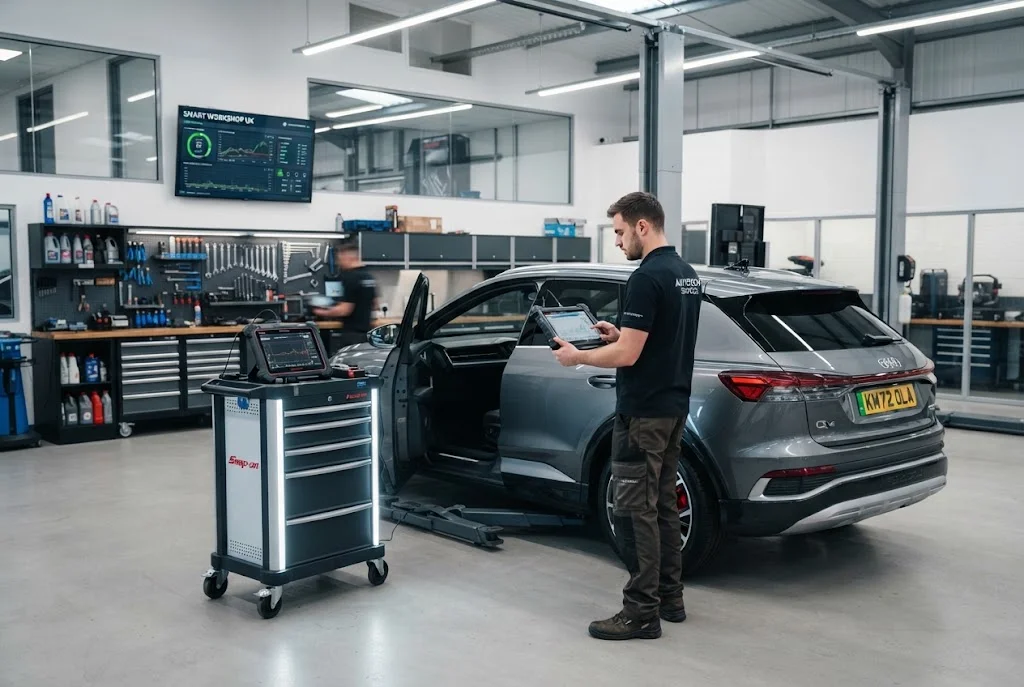
The modern auto service garage is changing rapidly as automotive technology, digital platforms and connected vehicles reshape the way maintenance and repairs are delivered. A traditional workshop once depended heavily on manual inspections, paper records and phone-based appointments. Today, smart garages can combine diagnostic technology, digital booking, automated workflows and connected servicing to create a more organised experience for both technicians and customers.
This transformation is not simply about adding computers to a workshop. It is about connecting different parts of the service journey, from booking and vehicle inspection to diagnostics, repair updates and maintenance records. As vehicles become more electronically sophisticated, garages are also adapting their tools and processes to keep pace.
What Is an Auto Service Garage in the Digital Era?
An auto service garage still performs the essential work drivers expect, including inspections, servicing, repairs, diagnostics and component replacement. What is changing is the way these services are organised and delivered.
A digitally enabled garage may allow customers to book appointments online, receive automated reminders, approve recommended work electronically and receive updates while their vehicle is being serviced. Technicians can use diagnostic equipment to access vehicle information and digital inspection systems to document findings.
This creates a more connected workflow. Instead of treating every interaction as a separate event, the garage can maintain a continuous digital record of the service process.
The wider automotive sector is increasingly focused on vehicle data and connected systems. UK government research has examined the potential value of digitally shared connected-vehicle data, demonstrating how vehicle-generated information can support different automotive and transport applications.
How Smart Garages Are Changing Traditional Workshops
Smart garages combine physical workshop expertise with digital technology. The aim is usually not to automate every mechanical task but to make the overall process more efficient and transparent.
For example, a customer might submit a booking request through a website or app. The workshop management platform can then schedule the appointment, allocate available resources and send confirmation automatically. When the vehicle arrives, technicians can use digital inspection tools to record its condition.
If additional work is identified, the garage can send the customer a digital report containing explanations, photographs or recommendations. This gives the customer more information before deciding whether to proceed.
These capabilities connect directly with the broader digital transformation of auto repair services, where diagnostics, automation and connected workshop systems increasingly work together.
AI-Powered Diagnostics and Smarter Fault Detection
AI-powered diagnostics are becoming an important part of automotive technology. Modern vehicles generate substantial amounts of electronic information, and advanced software can help technicians organise and interpret that information.
AI systems can potentially identify patterns across diagnostic data, compare symptoms and highlight areas that deserve closer inspection. However, these tools should complement professional diagnosis rather than replace it.
A technician still needs to understand the vehicle, verify the information and physically inspect components where necessary. A diagnostic result is useful evidence, but it is not automatically a complete repair instruction.
The combination of human expertise and digital analysis can nevertheless make workshop processes more systematic. Technicians can spend less time manually organising information and more time investigating the actual cause of a problem.
Online Service Booking Makes Garages More Accessible
Online service booking is one of the most visible changes customers experience when dealing with a modern auto service garage. Instead of calling during opening hours, motorists can often request an appointment through a website or mobile platform.
A well-designed booking system can display available appointment options, collect vehicle information and send confirmation automatically. It may also issue reminders before the scheduled visit.
For customers, this can make arranging routine servicing more convenient. For garages, digital booking can reduce repetitive administrative work and give staff a clearer overview of upcoming appointments.
The technology also creates opportunities for better communication. A booking confirmation can include preparation instructions, while follow-up messages can remind customers about future servicing requirements.
Workshop Automation Beyond the Booking Process
Workshop automation extends far beyond appointment scheduling. Modern garage technology can support job cards, technician assignments, parts information, customer notifications, invoicing and service records.
When these systems are connected, information does not need to be repeatedly entered into separate processes. A customer’s vehicle details can move from the booking stage into the workshop workflow, while inspection findings can become part of the final service record.
This can reduce administrative duplication and make it easier for staff to track the progress of a vehicle.
Automation can also support reminders for routine maintenance. Instead of relying entirely on a customer remembering when a service is due, digital systems can help garages communicate at appropriate intervals based on available vehicle and service information.
Connected Servicing and the Rise of Vehicle Data
Connected servicing is closely linked to the increasing amount of information generated by modern vehicles. Sensors and electronic systems can provide information about vehicle operation, faults and system conditions.
Connected vehicles may therefore create new opportunities for workshops to identify issues earlier or prepare for a service visit with more information available in advance.
However, access to vehicle data is not always straightforward. Different manufacturers, systems and technologies can create different technical and commercial arrangements. Data security and privacy also need to be considered whenever vehicle information is transmitted between systems.
The UK government has researched connected vehicle data and its potential applications, highlighting the broader importance of digitally generated vehicle information within the transport ecosystem.
How Smart Garage Technology Improves Customer Experience
Technology is valuable to a garage only when it improves a useful part of the customer journey. Customers generally want clear information, convenient scheduling, predictable communication and confidence that recommended work is properly explained.
Digital inspections can help address these expectations. Instead of receiving a vague explanation that a component needs attention, customers may be able to see photographs or detailed notes from the technician.
Automated status updates can also reduce uncertainty. A customer may receive confirmation that a vehicle has entered the workshop, an update when inspection work is complete and a message when the vehicle is ready.
This approach supports the wider evolution of vehicle maintenance, where servicing increasingly becomes an ongoing digital process rather than a series of disconnected garage visits.
Smart Garages and Predictive Maintenance
Predictive maintenance represents another important development in smart garage technology. Traditional servicing often follows fixed schedules, while predictive systems attempt to identify potential issues using vehicle information and maintenance data.
For example, a connected system may identify unusual readings or patterns that justify further investigation. A workshop could then prepare for a customer visit before a minor issue develops into a more disruptive problem.
Predictive maintenance should not be confused with guaranteed failure prediction. Not every component can be monitored in the same way, and digital data cannot capture every physical condition. Nevertheless, it can provide an additional information layer for technicians and vehicle owners.
This is why the future of the digital repair process is likely to combine predictive information with conventional inspection and professional judgement.
The Role of Automotive Software in Garage Technology
Automotive software now supports many aspects of vehicle servicing. Diagnostic platforms, workshop management systems, inspection applications and customer communication tools all rely on software.
As a result, software capability is becoming part of the modern garage’s operational infrastructure. A workshop may have excellent mechanical equipment, but digital systems can determine how efficiently information moves between its technicians, service advisors and customers.
Software also plays a growing role in vehicles themselves. Modern cars can contain multiple electronic control systems and software-dependent features. This means technicians increasingly need the knowledge and equipment required to work with both mechanical and electronic systems.
The UK automotive environment also includes growing attention to cybersecurity and software-related vehicle requirements. As vehicles become more connected, protecting digital systems becomes an important part of the broader automotive technology landscape.
What Smart Workshops Mean for Independent Garages
Digital transformation is not limited to large dealership networks. Independent workshops can also adopt individual technologies according to their operational needs.
A garage does not necessarily need to replace its entire infrastructure at once. It might begin with online booking, digital inspection reports or a workshop management platform. Diagnostic equipment and technician training can then develop alongside customer demand.
This gradual approach can make technology adoption more practical. The objective is to select tools that solve real workshop problems rather than introducing technology simply because it is new.
For some businesses, customer communication may be the first priority. Others may benefit more from improved diagnostic capability, inventory management or automated service reminders.
The Connection Between Smart Garages and Mobile Servicing
The smart garage concept also overlaps with the growth of mobile automotive services. Digital booking platforms make it possible for customers to request automotive assistance without necessarily visiting a conventional workshop for every task.
This creates a natural connection with mobile auto service, where app-based booking, home vehicle repairs and on-demand maintenance are becoming part of the wider automotive service conversation.
Not every repair is suitable for a mobile technician, and some work requires specialist workshop equipment. However, the underlying customer expectation is similar: make vehicle maintenance easier to arrange and more convenient to manage.
Where the Smart Garage Revolution Is Heading
The smart garage is likely to become increasingly connected as vehicle technology develops. Online booking, digital inspections, AI-assisted diagnostics, connected servicing and automated communication can work together as one integrated service journey.
The future may also involve stronger links between vehicle monitoring and workshop management. A vehicle could provide relevant information before arriving at a garage, allowing technicians to prepare equipment or investigate a potential issue more efficiently.
At the same time, customers are likely to expect greater digital convenience. The experience of booking, approving work, receiving updates and maintaining service records can increasingly resemble the digital experiences people already encounter in other industries.
This does not mean every garage will become identical. Workshop specialisation, local customer needs, technician expertise and the types of vehicles being serviced will continue to influence how businesses operate.
Why Human Expertise Still Matters
Despite the rapid development of garage technology, skilled technicians remain essential. Digital tools can provide information, automate administrative processes and support diagnosis, but they cannot eliminate the need for practical inspection and professional decision-making.
A technician must still understand how mechanical components interact, recognise physical symptoms and determine whether digital information matches the vehicle’s actual condition.
The strongest smart workshops are therefore likely to be those that use technology to strengthen technical expertise. The goal is not technology for its own sake. It is a better workflow in which digital tools help people deliver accurate, transparent and efficient automotive services.
Smart Garage Technology and the Future of Auto Care
The smart garage revolution is also changing the broader meaning of automotive care. Servicing is moving beyond individual repair appointments towards a more continuous relationship between drivers, vehicles and service providers.
That evolution connects naturally with reinventing auto care, where digital ownership, connected maintenance and changing consumer expectations become part of the same automotive experience.
It also creates opportunities for garages to build stronger long-term customer relationships. A workshop that maintains useful digital service records, communicates clearly and provides convenient booking options can remain connected with customers between physical visits.
Conclusion
The modern auto service garage is becoming more connected, data-driven and digitally organised. Smart garages can combine online service booking, AI-powered diagnostics, workshop automation, digital inspections and connected servicing to improve how vehicles are maintained.
The transformation is not about removing the mechanic from the process. Instead, it gives skilled professionals better tools and gives customers more convenient access to information. As connected vehicles and automotive software continue to develop, the garage itself is becoming an increasingly important part of the vehicle’s digital ecosystem.
For drivers, the result can be a more transparent and convenient service experience. For workshops, it creates opportunities to streamline operations and build stronger relationships with customers. The smart garage revolution is therefore less about replacing traditional automotive expertise and more about combining that expertise with the technology required for the next generation of vehicle servicing.
For broader context on how connected vehicle information is being explored within the UK transport environment, the UK Government’s connected vehicle data research provides useful background.