Mobile auto service is changing how drivers approach vehicle repairs and maintenance. Instead of taking every vehicle problem to a traditional workshop, motorists can increasingly arrange for a qualified mobile mechanic to travel to their home, workplace or another suitable location. Digital booking platforms, mobile technology and changing customer expectations are helping make this model more accessible.
The idea is straightforward: bring suitable automotive services to the customer rather than requiring the customer to bring the vehicle to a garage. While not every repair can be completed outside a workshop, many routine maintenance and diagnostic tasks can potentially be performed at a convenient location. This makes mobile auto service part of a wider transformation in the way automotive services are delivered.
What Is Mobile Auto Service?
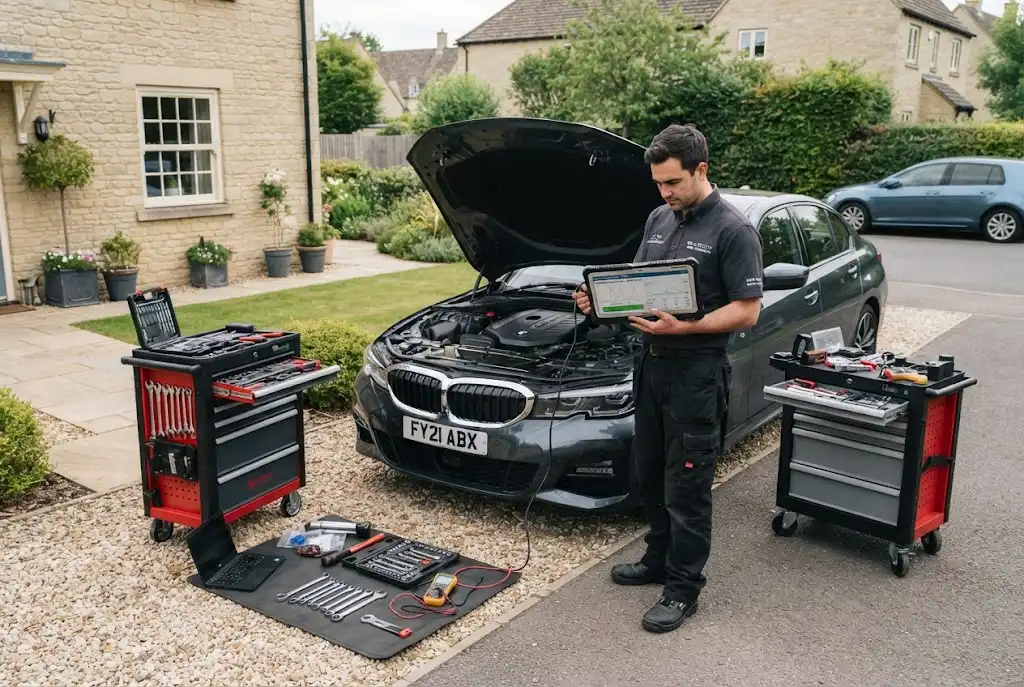
Mobile auto service refers to automotive maintenance, diagnostics or repair work performed at a customer’s chosen location rather than exclusively inside a conventional garage. Depending on the provider and equipment available, a mobile mechanic may visit a home, workplace, car park or roadside location.
The services offered can vary considerably. Some mobile mechanics focus on inspections and routine maintenance, while others provide diagnostic services, battery-related assistance, minor repairs or other suitable mechanical work.
More complex repairs may still require a fully equipped workshop. Heavy equipment, specialist machinery, vehicle lifts and controlled workshop environments can be essential for particular jobs. Mobile servicing therefore works alongside traditional garages rather than necessarily replacing them.
Why Drivers Are Turning to Mobile Mechanics
Convenience is one of the main reasons behind the growing interest in mobile mechanics. Taking a vehicle to a garage can require rearranging work schedules, arranging transport or waiting at the workshop while a service is completed.
A mobile mechanic can potentially remove some of that inconvenience by travelling to the vehicle. For suitable jobs, the customer can remain at home or continue with other activities while the technician carries out the agreed work.
This approach reflects broader changes in consumer behaviour. People increasingly expect services to fit around their schedules rather than requiring them to reorganise their day around a service provider.
That expectation is also influencing traditional garages, particularly as the smart garage revolution introduces online booking, digital communication and more flexible service processes.
How App-Based Servicing Is Changing the Experience
Digital platforms are an important part of the mobile servicing model. Instead of relying entirely on phone calls, customers can potentially enter vehicle information, select a service, choose a location and request an appointment online.
A well-designed platform can also manage confirmations, reminders and service updates. This creates a simpler journey from the initial request to the completion of the work.
For mobile mechanics, digital booking can help organise appointments geographically and reduce unnecessary administrative tasks. Customer information can also be recorded before the technician arrives, giving them a clearer understanding of the requested service.
Digital booking does not guarantee service quality, however. Customers should still consider the technician’s qualifications, experience, insurance arrangements, service scope and the provider’s approach to safety.
Home Vehicle Repairs and Everyday Convenience
Home vehicle repairs can be particularly useful when the vehicle is inconvenient or difficult to move. A driver may have a problem that does not require a full workshop but makes travelling to a garage difficult.
Having a technician attend the vehicle can remove the need for an additional journey. This can be valuable for households managing busy schedules or for vehicles that are temporarily unavailable for normal driving.
However, a home visit is not appropriate for every type of repair. Some jobs require lifting equipment, specialised machinery or workshop conditions. A responsible mobile mechanic should be able to explain whether a requested service is suitable for mobile work.
Mobile Diagnostics and Digital Automotive Technology
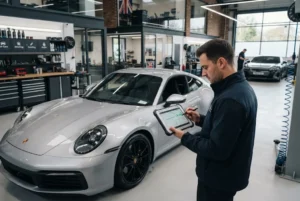
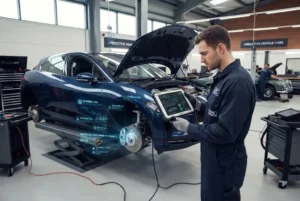
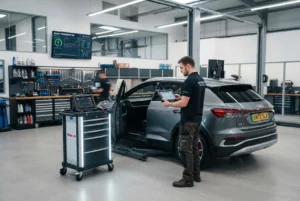
Modern mobile mechanics increasingly work with electronic diagnostic equipment. Contemporary vehicles contain numerous electronic control systems, making diagnostic capability an important part of many repair processes.
Portable diagnostic tools can allow technicians to retrieve relevant vehicle information at the customer’s location. This can help identify areas requiring further investigation and determine whether a repair can reasonably be completed on-site.
Diagnostic information still needs to be interpreted professionally. A fault code does not always identify a failed component by itself. Technicians may need to perform additional tests and physical inspections before recommending a repair.
This is closely connected to the broader development of digital auto repair, where diagnostic software and technology are increasingly supporting traditional mechanical expertise.
On-Demand Maintenance and Changing Customer Expectations
On-demand maintenance is part of a broader movement towards flexible service delivery. Customers can increasingly request services when they need them rather than relying solely on traditional appointment structures.
This does not mean scheduled servicing is becoming unnecessary. Manufacturer-recommended maintenance intervals remain important, and drivers should continue following appropriate servicing requirements.
Instead, on-demand services can complement scheduled maintenance by making suitable additional work easier to arrange. A customer might request a diagnostic inspection, battery-related service or another suitable task without having to make a separate trip to a workshop.
This flexibility is especially relevant to drivers who value time-saving services. The growth of digital platforms has made it easier to coordinate these requests and communicate with service providers.
Mobile Auto Service and the Convenience Economy
The rise of mobile mechanics fits into the wider convenience economy, where businesses increasingly deliver services directly to customers. The same principle can be seen across many industries: reduce unnecessary travel, simplify booking and make the service fit more naturally into everyday routines.
Automotive services have traditionally depended heavily on fixed physical locations. Workshops remain essential, but mobile service models introduce another delivery option for work that can safely be completed outside a garage.
The convenience advantage can be particularly noticeable when a customer has limited free time. Instead of arranging transport to and from a garage, the customer can potentially have the service performed at a location where the vehicle is already parked.
How Mobile Mechanics Can Complement Smart Garages
Mobile mechanics and smart garages should not be viewed as competing models in every situation. They can complement each other within a broader automotive service ecosystem.
A mobile technician may diagnose or complete a suitable repair at the customer’s location. If a more complex issue is identified, the vehicle can potentially be referred to a fully equipped workshop for additional work.
Digital systems can help coordinate this process. A mobile mechanic can record diagnostic information, inspection findings and completed work digitally, while a workshop can access the relevant information when further repair is required.
This creates a connection between mobile servicing and the broader concept of digital vehicle maintenance, where service information can become part of a more continuous maintenance record.
The Role of Digital Booking in Mobile Servicing
Digital booking is particularly important because mobile servicing depends on efficient scheduling. Unlike a conventional workshop, the technician must consider travel time, location and the duration of each appointment.
A digital platform can collect information before the appointment, including vehicle details, requested services and location. This can help the provider determine whether the job is suitable and plan the technician’s schedule.
Automated reminders can also reduce missed appointments. Customers can receive confirmation of the agreed time and location, while service providers can maintain a clearer overview of upcoming work.
For customers, the booking process should remain straightforward. A complicated interface can undermine the convenience that mobile servicing is designed to provide.
What Services Can a Mobile Mechanic Provide?
The exact service range depends on the technician, equipment and operating model. Potential mobile services may include selected routine maintenance, diagnostic checks, battery-related work, inspections and certain minor mechanical repairs.
Some providers may specialise in particular vehicle systems or service categories. Others may offer broader mobile assistance while referring complex work to a workshop.
Customers should confirm the exact scope of work before booking. A service that appears simple may require specialist equipment once the vehicle is inspected.
This is particularly important for safety-related work. Braking systems, steering components and other critical systems require appropriate technical procedures and equipment.
Mobile Service Does Not Mean Lower Technical Standards
Convenience should never be confused with reduced technical standards. A mobile mechanic still needs to work safely, use appropriate tools and follow suitable repair procedures.
Customers should consider whether the technician has relevant qualifications, experience and appropriate insurance. They should also ask what documentation will be provided after the work is completed.
Professional mobile servicing should include clear communication about the work performed, any limitations and recommendations for further inspection where necessary.
The same principle applies to traditional garages. Technology and convenience are valuable only when they are combined with competent workmanship.
Mobile Auto Service and Predictive Maintenance
The future of mobile servicing could become more closely connected to predictive maintenance. As vehicles generate more useful information, service providers may be able to receive indications that a vehicle requires attention before the customer notices a problem.
For example, connected vehicle information could potentially help identify an issue that requires inspection. A mobile technician could then be scheduled to assess the vehicle at a convenient location.
This would create a more proactive service model, where digital information helps determine when an intervention may be appropriate.
Predictive technology should still be treated carefully. It cannot identify every mechanical problem, and physical inspection remains necessary when a potential issue is detected.
Customer Experience Is Becoming a Competitive Factor
As more automotive services become digitally accessible, customer experience is becoming an increasingly important part of the service model.
Customers may judge a provider not only by the quality of the repair but also by how easy it is to book, how clearly information is communicated and whether the technician arrives as expected.
Mobile servicing has a natural advantage in convenience, but poor scheduling or unclear communication can quickly undermine that benefit.
Providers therefore need to combine technical capability with reliable customer service. Digital platforms can support this process, but the human interaction with the technician remains an important part of the experience.
How Mobile Servicing Fits Into Modern Auto Care
Mobile auto service is one part of a broader transformation in automotive care. The rise of smart garages, connected vehicles, digital maintenance and more flexible service models is changing how customers think about looking after their vehicles.
The development of modern auto care services shows how traditional maintenance is increasingly being combined with digital ownership and convenience-focused technologies.
Mobile servicing adds another layer to this transformation by moving appropriate services closer to the customer.
The Future of On-Demand Automotive Services
The mobile mechanic model is likely to continue evolving as digital platforms and automotive technology become more integrated. Booking systems can become more sophisticated, diagnostic tools can become more portable and connected vehicle information can provide additional context for service decisions.
However, physical workshops will remain important. Complex repairs, specialist equipment and certain safety-critical procedures require facilities that cannot easily be replicated at a customer’s home or workplace.
The future is therefore likely to involve multiple service formats working together. Traditional garages, smart workshops and mobile mechanics can each serve different customer needs and different types of automotive work.
Conclusion
Mobile auto service is changing the relationship between drivers and automotive professionals by making suitable maintenance and repair services available at more convenient locations. Digital booking, portable diagnostic technology and on-demand scheduling are helping support this shift.
The model offers clear convenience benefits, particularly for routine or suitable repairs that can safely be completed outside a traditional workshop. At the same time, complex mechanical work will continue to require specialist garage facilities.
The most useful role for mobile servicing is therefore not to replace conventional workshops but to expand the range of ways drivers can access professional vehicle care. As connected vehicles, digital maintenance systems and customer-focused service platforms continue to develop, mobile mechanics are becoming part of a broader, more flexible automotive service ecosystem.
For background on the wider digital transformation affecting vehicle servicing and repair, the UK Government’s work on vehicle on-board information provides useful context.