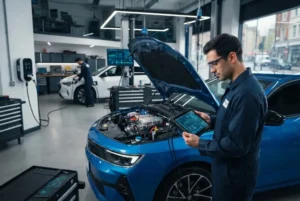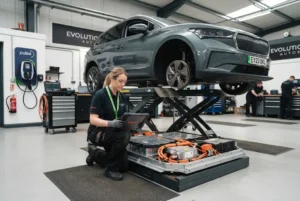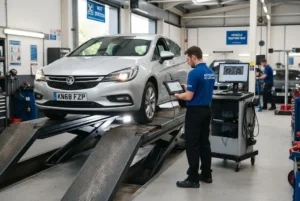
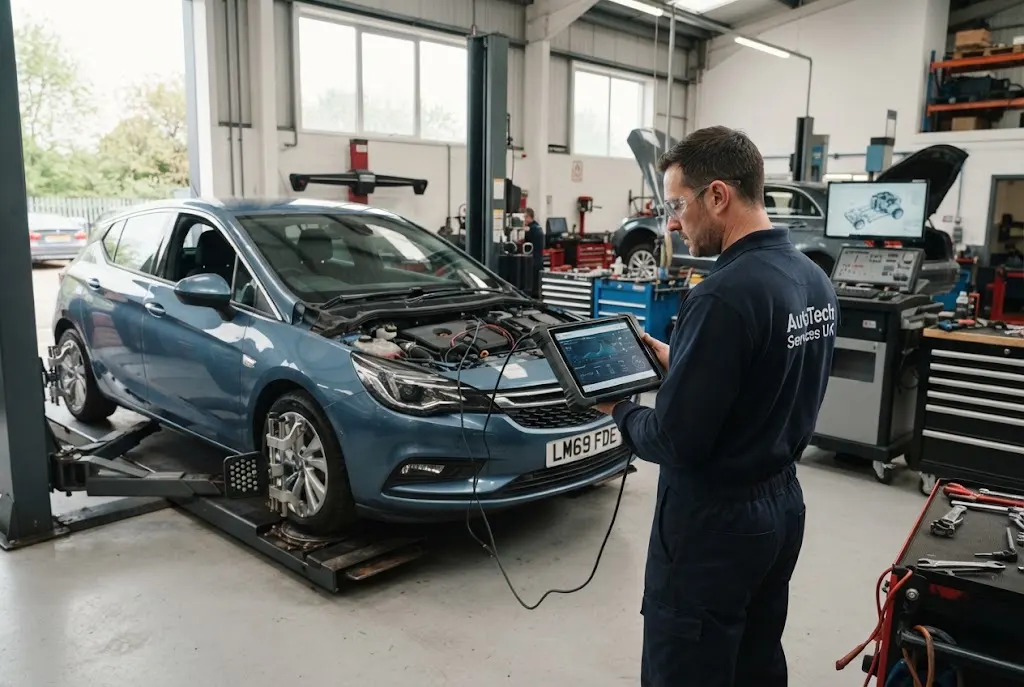
The change is particularly relevant in the UK, where vehicles are becoming more electronically sophisticated and workshops are facing growing demand for diagnostic expertise. The Institute of the Motor Industry has reported strong demand for skills linked to vehicle inspection and diagnostics, while the wider industry is also developing AI-assisted diagnostic solutions.
AI does not remove the need for qualified technicians. Instead, its emerging role is to provide additional information and decision support, helping professionals investigate faults, organise vehicle information and identify potential problems more efficiently.
Why Auto Inspection Services Are Becoming More Digital
Modern vehicles contain networks of electronic control units, sensors and software systems. These components monitor everything from engine operation and braking to emissions, safety systems and driver-assistance features.
As vehicles generate more information, inspection methods can also become more data-driven. A technician may now have access to diagnostic trouble codes, sensor readings, system alerts and historical information alongside a conventional physical inspection.
This creates a more detailed picture of vehicle condition. Instead of relying only on visible symptoms, a technician can use digital information to investigate what may be happening inside the vehicle’s electronic and mechanical systems.
The trend also connects with the wider evolution of MOT and service technology, where digital records, connected diagnostics and smarter testing are becoming increasingly relevant.
How AI Diagnostics Can Assist Technicians
AI diagnostics are designed to help technicians make sense of complex vehicle information. Rather than simply presenting a list of fault codes, AI-supported systems can potentially analyse multiple pieces of information and identify relationships between them.
The Institute of the Motor Industry has highlighted the growing use of AI within automotive diagnostics. Its reporting describes AI being integrated into diagnostic tools with the aim of helping technicians save time, improve accuracy and work through complex faults with more structured guidance.
For a workshop, the practical value could come from reducing the time required to investigate difficult problems. A diagnostic system might help organise symptoms, technical information and previous findings so that the technician can focus more quickly on the most relevant areas.
AI should nevertheless be treated as an assistance technology. Diagnostic recommendations still need to be assessed by an appropriately trained professional, particularly where a fault could affect vehicle safety.
From Digital Inspections to Intelligent Reports
Digital inspections have already changed how many workshops document vehicle condition. Instead of relying exclusively on handwritten notes, technicians can use digital platforms to record inspection findings, attach photographs and create structured reports.
The next stage is the intelligent use of that information.
AI systems could potentially analyse inspection data and identify recurring patterns across vehicles. For example, a workshop may be able to identify common failure patterns associated with particular components, mileage ranges or vehicle configurations.
For motorists, the benefit could be a clearer explanation of what has been found. A digital inspection report can organise information into categories such as immediate safety concerns, recommended maintenance and issues that can be monitored over time.
This can make the inspection process easier to understand without removing the technician’s responsibility for the actual assessment.
Connected Vehicles Are Creating More Inspection Data
Connected vehicles are another major factor behind the development of smarter inspections.
Modern connected systems can collect and communicate information from different parts of a vehicle. Depending on the vehicle and its technology, this can include diagnostic information, system status and other operational data.
Greater access to vehicle information creates opportunities for workshops to prepare more effectively for appointments. If a fault has already been detected electronically, a technician may have more information available before the physical inspection begins.
However, connected vehicle data also creates important questions around access, security, privacy and standardisation. UK government policy work continues to address access to vehicle on-board diagnostic and repair and maintenance information, highlighting the importance of how this information can be accessed and used.
Predictive Analytics Could Shift Maintenance Towards Prevention
One of the most interesting applications of AI is predictive analytics.
Traditional maintenance often responds to a problem after a warning appears or a component fails. Predictive systems attempt to identify patterns that may indicate a developing issue before a major failure occurs.
A predictive approach could use historical vehicle data, sensor readings and diagnostic information to identify unusual behaviour. If a system detects a pattern associated with a potential component problem, it could prompt a closer inspection.
This does not mean every prediction will be correct. Vehicle conditions vary considerably, and data quality can affect the reliability of any automated analysis. Predictive analytics should therefore support inspection rather than replace professional judgement.
The potential benefit is earlier intervention. Finding a developing problem before it becomes a major failure could help drivers manage maintenance and reduce unexpected disruption.
Vehicle Health Reports Could Become More Detailed
A vehicle health report traditionally gives motorists an overview of problems identified during an inspection. Digital technology could make these reports more comprehensive and easier to update.
A future vehicle health report could combine information from several inspections, diagnostic events and maintenance records. Instead of treating every workshop visit as an isolated event, the system could build a longer-term picture of vehicle condition.
For drivers, that could make it easier to understand whether a vehicle is experiencing an isolated fault or a recurring problem.
For workshops, historical information could help technicians identify patterns and avoid repeating diagnostic work that has already been completed.
AI Can Support Inspection Technology, Not Replace It
There is an important distinction between AI-assisted inspection and fully automated inspection.
Artificial intelligence can analyse information, classify images, identify patterns and generate recommendations. Physical vehicle inspection, however, can involve conditions that require human observation, practical testing and professional judgement.
This is particularly important for safety-critical systems. UK government research into AI assurance for connected and automated vehicles has highlighted the need to manage safety, security and other risks when AI is used in vehicle-related systems.
For that reason, responsible inspection technology is likely to combine automation with qualified human oversight rather than remove technicians from the process.
ADAS Is Increasing the Need for Specialist Inspections
Advanced driver-assistance systems are another reason automotive inspections are becoming more technically demanding.
Modern vehicles can use cameras, radar and other sensors to support functions such as emergency braking, lane assistance and adaptive driving features. When these systems are disturbed by repairs, component replacement or other work, appropriate calibration can become important.
The Institute of the Motor Industry reported in 2026 that only around 3% of the UK technician workforce was ADAS qualified at the time of its forecast. Its research also projected that the number of ADAS-equipped vehicles would grow significantly, increasing the need for technicians with relevant skills.
This means that the future of auto inspection services will involve not only AI software but also technicians who understand increasingly sophisticated vehicle systems.
Automation Can Improve Workshop Efficiency
Automation can reduce repetitive administrative tasks and help workshops organise information more efficiently.
Digital inspection systems can standardise how technicians record findings. Automated workflows can help create reports, organise customer notifications and maintain inspection histories.
AI could add another layer by assisting with information analysis and diagnostic guidance. When these systems work together, technicians may spend less time on repetitive information management and more time on physical diagnosis and repair.
However, automation also requires investment. Workshops may need new diagnostic equipment, software subscriptions, data systems and staff training. The financial benefit therefore depends on whether the technology improves productivity enough to justify its cost.
Skills Are Still Central to Modern Inspections
Technology does not eliminate the need for skilled automotive professionals. In some respects, it increases the importance of specialist knowledge.
The technician of the future may need to understand mechanical systems alongside software, electronic diagnostics, high-voltage technology, connected vehicles and advanced driver-assistance systems.
The IMI’s 2026 labour market research reported around 16,000 automotive vacancies, with technical roles making up a significant proportion of demand. It also identified shortages in diagnostic roles and other specialist areas.
This skills challenge matters because sophisticated inspection technology is only useful when people have the knowledge required to interpret its results correctly.
How AI Inspections Could Affect Drivers
For motorists, the biggest change may be the quality and speed of information available during a vehicle inspection.
Drivers could increasingly receive digital reports that combine photographs, diagnostic information and technician recommendations. In some cases, predictive systems may also identify issues that deserve monitoring before they become obvious symptoms.
That could make maintenance decisions more transparent. Instead of receiving a generic recommendation, a motorist may be able to see exactly what was inspected and why further investigation has been suggested.
Nevertheless, consumers should still ask questions when a workshop recommends expensive work. AI-generated information should not be treated as an automatic authorisation for repairs. Drivers should understand the underlying fault, the proposed solution and the expected cost.
AI and the Future of Vehicle Servicing
The development of intelligent inspection systems is closely connected with the wider transformation of vehicle servicing.
As cars become more connected, workshops can potentially move from reactive diagnosis towards more proactive maintenance. Digital records can provide historical context, connected diagnostics can supply additional information and predictive analytics can help identify potential problems earlier.
These technologies may also become increasingly important for hybrid and electric vehicles, where battery systems, electronic controls and specialised components require different inspection approaches. The growing role of hybrid services and EV servicing will therefore be closely connected with advanced diagnostics and digital maintenance.
What UK Workshops Need to Prepare For
Workshops preparing for the next stage of vehicle inspection will need to consider more than buying an AI-enabled diagnostic tool.
They may need to invest in technician training, secure data systems, compatible diagnostic equipment and clear procedures for validating technology-assisted findings.
They will also need to understand the limits of automated systems. An AI recommendation should be assessed against physical evidence, manufacturer information and the technician’s professional judgement.
Skills development will be particularly important as connected and automated vehicle technology expands. The UK government is already developing regulatory and safety frameworks around automated vehicles, demonstrating how quickly vehicle technology is moving beyond traditional mechanical systems.
What the Future of Auto Inspection Services Looks Like
The future of auto inspection services is likely to be increasingly connected, data-driven and technology-assisted. AI diagnostics can help technicians analyse complex information. Digital inspections can improve documentation. Predictive analytics can support preventative maintenance, while connected vehicles can provide additional information about vehicle condition.
Yet the most useful model is unlikely to be technology operating independently. Modern inspection is more likely to combine automation with human expertise, using AI to process information while qualified technicians remain responsible for interpreting findings and carrying out appropriate physical checks.
For UK motorists, that could mean faster diagnosis, clearer vehicle health reports and more proactive maintenance. For workshops, it will mean adapting to a vehicle fleet that increasingly combines mechanical components with software, sensors and connected systems.
The automotive inspection industry is therefore moving beyond the traditional question of whether a vehicle appears to be functioning correctly. Increasingly, the goal is to understand the vehicle through a combination of physical evidence, digital information and intelligent analysis. That shift will be an important part of the UK’s wider automotive transformation.