
A BMW service today is about far more than an oil change and a stamp in a book. For a UK owner, BMW service now starts on the driveway, often before a spanner is lifted. Your car monitors its own condition, counts down to the work that is due, and can share that picture with you in plain language. As a result, servicing feels less like guesswork and more like a clear plan.
This guide explains how that digital shift works in practice. It covers what a service involves, how connected technology helps, and what your choices are. It also looks honestly at costs, without invented figures, and at what smarter care means day to day.
What a BMW Service Involves Today
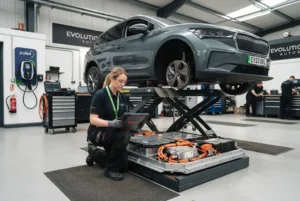
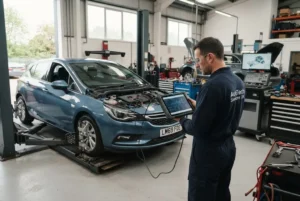
At its core, a BMW service is still careful, hands-on maintenance. A technician inspects the car, replaces items that wear out, and checks safety systems. Engine oil and filters, brakes, tyres, fluids, lights and wipers all matter. So do software checks and a careful look under the car. That is the foundation of every good BMW service.
The difference now is timing. Instead of relying only on a fixed yearly date, many modern BMWs use condition-based servicing. In other words, the car itself helps decide when work is due. Our wider guide to car servicing explains how routine care protects reliability and value over time.
Condition-based servicing, explained simply
Condition-based servicing means the car tracks time, mileage and actual wear. Sensors and onboard calculations watch items such as oil condition and brake pads. Then the dashboard, and often an app, shows what is coming due and roughly when.
This approach has two clear benefits. First, you avoid leaving worn parts too long. Secondly, you also avoid replacing parts that still have useful life. However, condition-based prompts are a guide, not a licence to ignore age-related checks. Rubber, fluids and batteries still age, even on low-mileage cars.
BMW Digital Services and BMW Connected Vehicles
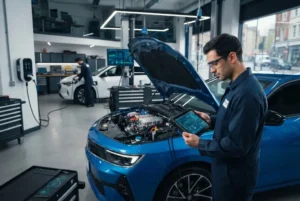
BMW digital services bring the car, the owner and the workshop closer together. Rather than waiting for a problem to appear, BMW connected vehicles can report their own status. That status may include service due dates, warning messages and basic health information. That makes a BMW service easier to plan around real life.
For owners, the benefit is simple visibility. You can see what the car is asking for, plan a visit in advance, and arrive with fewer surprises. Meanwhile, the workshop can prepare ahead, because it already has a clearer picture of the car.
Remote diagnostics and digital service records
Remote diagnostics is best understood as an early conversation. In concept, fault information can be reviewed before the car arrives, so the right technician and parts are ready. This does not replace a physical inspection. Instead, it helps the workshop start in the right place and saves wasted time.
Digital service records matter just as much. A clear electronic history shows when work was done and what was completed. Consequently, future garages can plan better, and future buyers can see that the car was cared for. Always keep your own invoices too, as a complete paper trail still helps.
Over-the-air software updates
Software is now part of the car itself. Over-the-air updates are an established technology across modern cars, and they can refresh systems without a workshop visit for every change. Not every update is a service item, of course. Still, keeping software current is now part of good BMW service and good long-term care.
BMW AI Diagnostics and BMW Maintenance Technology
BMW AI diagnostics sounds futuristic, but the idea is practical. Modern cars produce large amounts of sensor data every journey. BMW maintenance technology uses that data to spot patterns that a person might miss at first glance. Used well, it makes every BMW service more focused and less reactive.
For example, a small change in temperature, vibration or voltage can hint at a developing fault. Therefore, software can flag a part for closer inspection before it fails. This is fault prediction, not fortune-telling, and a technician must still confirm the cause.
From warning lights to sensor-led maintenance
Traditionally, many owners waited for a warning light and then reacted. Sensor-led maintenance turns that process around. The car is monitored over time, trends are compared, and work can be planned at a convenient moment. Our article on predictive vehicle maintenance explores this shift in more detail across modern workshops.
The direction of travel is clear, even where tools are still developing. Earlier warnings should mean fewer breakdowns, less secondary damage, and better planning. Above all, BMW innovation in this area is useful only when it helps a human make a better decision.
BMW Approved Service: Dealer or Specialist?
BMW approved service is a phrase owners hear often, yet it can mean different things. In general terms, it means work carried out to the manufacturer’s schedule, using suitable parts and procedures, and recorded properly. It is about standard and evidence, not just a logo above a door.
A main dealer offers direct access to brand systems and model-specific knowledge. In contrast, an approved or specialist independent garage may offer the same careful standard with a more personal service. Many UK owners value a specialist who knows their model well and explains work clearly. Whatever you choose, a BMW service should always leave a clear, dated record.
Warranty is the key concern for many people. As a general rule, keeping to the required schedule, using appropriate parts and fluids, and keeping full records helps protect your position. Always check your own warranty terms first, because cover differs by age and provider. A good garage, dealer or independent, should happily confirm how it records work.
BMW Servicing Costs: The Factors That Matter
BMW servicing costs cannot be summed up honestly in a single figure. Any article that promises one simple price is missing the point. Instead, it is far more useful to understand the factors that shape your quote, so you can compare like with like. Our guide to car service costs in the UK takes a similar, factors-first approach.
- Model and engine: larger, higher-performance and more complex cars usually need more time and more specialised parts, in general terms.
- Age and mileage: older cars may need extra items that younger cars do not.
- Parts required: brakes, tyres and filters differ in specification, and approved-quality parts vary.
- Labour time: a straightforward inspection is quicker than tracing an electrical fault.
- Technology level: sensors, software and driver-assistance systems can need calibration and specialist equipment.
- Location and garage type: overheads and labour rates differ around the UK.
So, ask for an itemised quote before work begins. Ask what is essential now, what can be monitored, and what can wait safely. That conversation is at the heart of a good BMW service, because it puts safety first and keeps control in your hands.
Smart Ownership, Premium Mobility and BMW Innovation
Smart ownership means using these tools without becoming a slave to them. Apps and reminders can prompt you when a service approaches, store key dates, and help you book ahead. Transparent records then show what was done, which builds confidence at resale time and at every future visit. In practice, smart ownership turns a BMW service from a chore into a simple routine.
This is where premium mobility becomes real, rather than a brochure phrase. Premium mobility is not only about comfort on the move. It is also about a car that is ready when you need it, maintained with little fuss, and supported by clear information. In short, less downtime and fewer surprises feel genuinely premium.
BMW innovation ties these threads together. Connected reporting, digital records, software updates and smarter diagnostics all serve one goal: a car that communicates clearly. For the owner, that means less time worrying and more time enjoying the drive. Read more about where future mobility is heading in the UK for the wider picture.
Your Next BMW Service: A Simple Checklist
Before you book your next BMW service, a few simple steps will help:
- Check what the car itself is asking for, and note any warnings or symptoms.
- Look at your digital and paper service records, so nothing is repeated or missed.
- Confirm the garage will follow the correct schedule and record the work properly.
- Ask for an itemised, factors-based quote, with urgent and future work separated clearly.
- Keep the final invoice and update your own records after the visit.
BMW service is becoming digital, but its purpose has not changed. It is still about safety, reliability and enjoying a well-kept car. The technology simply gives you better information, earlier. Use that information, choose a garage you trust, and your BMW should reward you with calm, confident motoring for years to come.