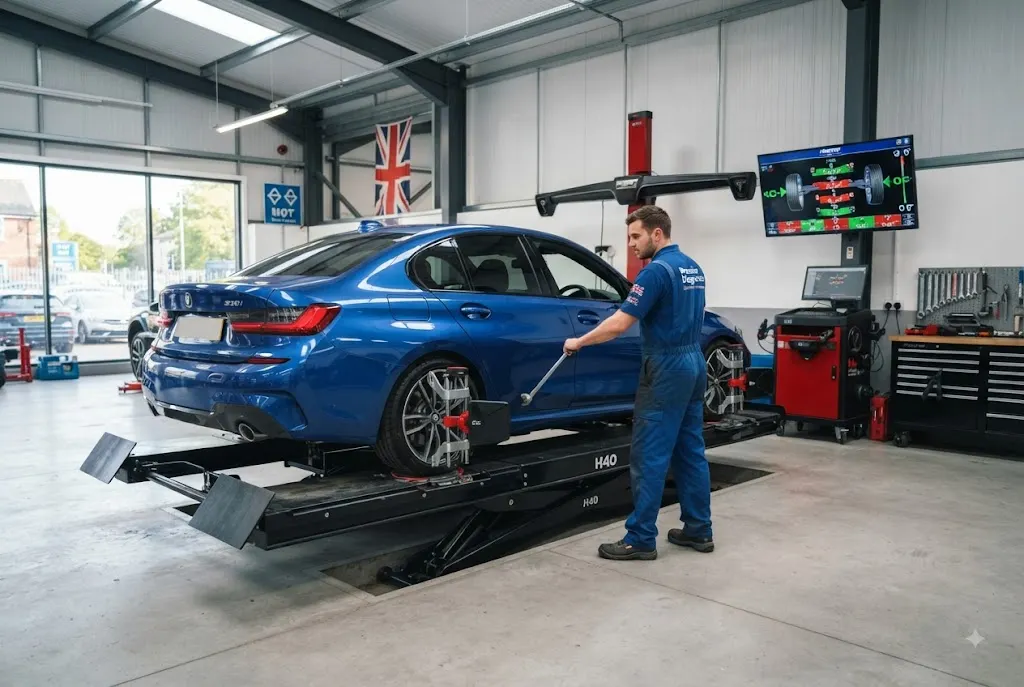
Wheel alignment is becoming increasingly digital as modern workshops adopt advanced measurement equipment, connected diagnostic systems and increasingly intelligent software. What was once largely a manual measurement process can now involve cameras, sensors, digital targets and computerised analysis designed to identify alignment issues more quickly and consistently.
Correct alignment matters because the relationship between a vehicle’s wheels and steering geometry can influence handling, tyre wear and driving behaviour. When alignment is outside the manufacturer’s specified parameters, a vehicle may not perform as intended.
The latest developments go further than simply making measurements easier to read. Digital alignment systems can connect wheel geometry data with other vehicle information, while AI-assisted diagnostics may eventually help technicians identify patterns associated with uneven tyre wear, steering problems or changes in vehicle behaviour.
Why Wheel Alignment Matters in Modern Vehicles
Wheel alignment refers to the geometric relationship between the wheels and the vehicle. Depending on the vehicle, technicians may consider measurements such as toe, camber and caster, along with other manufacturer-specific alignment parameters.
Correct settings help ensure that the wheels point and operate as intended when the vehicle is travelling straight or negotiating a corner. Poor alignment can contribute to uneven tyre wear, steering concerns and changes in vehicle behaviour.
Alignment can also be affected by events such as hitting a pothole or kerb, replacing suspension or steering components, or making other changes to the vehicle. However, a visible symptom does not always prove that alignment is the only underlying problem.
This distinction is important. A vehicle pulling to one side, for example, can have several possible causes. A professional inspection should therefore consider tyres, suspension, steering and other relevant components rather than assuming that an alignment adjustment will solve every issue.
How Digital Alignment Has Changed Workshop Procedures
Traditional alignment equipment relied heavily on mechanical gauges and technician interpretation. Modern systems can use cameras, sensors and electronic measurement tools to produce detailed alignment readings.
These systems can display measurements on a screen and compare them with reference values. This can make it easier for technicians to identify which angles are outside the desired range and where adjustments may be required.
Digital alignment also creates a useful record of the vehicle’s condition. Before-and-after measurements can potentially be stored or presented to customers, helping explain why an adjustment was recommended.
For larger workshops, digital records can also connect alignment work with wider service-management systems. This fits into the broader movement towards garage chains going digital, where workshop information is increasingly managed through connected platforms rather than isolated paper records.
What AI Diagnostics Could Add to Wheel Alignment
Artificial intelligence is beginning to influence automotive diagnostics, although its role in wheel alignment should be viewed realistically. AI does not remove the need for accurate measurement or qualified technicians.
Instead, AI-assisted systems may help analyse larger amounts of information and identify relationships that could otherwise be difficult to spot. For example, alignment measurements could potentially be considered alongside vehicle mileage, tyre wear patterns, steering observations and previous service information.
This could help technicians identify recurring issues or prioritise further investigation.
However, an algorithmic recommendation should not automatically be treated as proof of a mechanical fault. If a system identifies an unusual pattern, a technician still needs to inspect the vehicle and determine whether the result has a genuine mechanical explanation.
The wider automotive industry is already moving towards more data-driven diagnostics. As discussed in automotive service companies, connected workshop technology can help technicians manage increasingly complex vehicle information.
Digital Alignment and Steering Technology
Modern steering systems add another layer to alignment work. Many vehicles use electronic power steering, while some newer models incorporate advanced driver assistance systems that rely on cameras, radar and other sensors.
The steering system must therefore be considered alongside the vehicle’s wider electronic architecture. An alignment adjustment may be mechanically correct while another system still requires attention or calibration.
The current DVSA MOT inspection manual includes checks covering steering gear, steering linkage, power steering and electronic power steering. It also specifies that certain steering-related defects can become major or dangerous defects depending on their effect on vehicle safety.
This illustrates why alignment should not be treated as an isolated wheel adjustment. Steering condition, suspension condition and electronic systems can all be relevant to how a vehicle behaves on the road.
Tyre Wear Monitoring Can Reveal Alignment Problems
One of the most useful clues to alignment condition can come from tyre wear. Uneven wear across a tyre may indicate that the wheel is not operating within the desired geometry, although other causes should also be considered.
Digital inspection systems can make tyre observations easier to record and communicate. Some workshop platforms can also combine inspection results with photographs and customer records.
Tyre condition is already an important part of the UK’s MOT inspection framework. The DVSA’s current inspection manual covers tyre tread depth, tyre pressure monitoring systems, tyre condition and other tyre-related requirements.
For workshops, the value of digital tyre monitoring is therefore not simply convenience. It can help create a more complete picture of the vehicle’s condition and provide useful evidence when discussing recommended maintenance.
Why Vehicle Stability Depends on More Than Alignment
Vehicle stability is influenced by multiple systems working together. Steering geometry, suspension, tyres, brakes, electronic stability systems and the condition of the road all play a role.
Correct alignment can contribute to predictable handling, but it cannot compensate for worn suspension components, damaged tyres or steering faults.
This is particularly important when diagnosing customer complaints. A driver may report that the vehicle feels unstable, pulls to one side or does not return to centre correctly. The workshop should investigate the entire relevant system rather than automatically treating the complaint as an alignment issue.
Modern diagnostic tools can help by providing more information, but technician judgement remains essential.
AI Could Make Alignment Diagnostics More Predictive
The most interesting future development may be a move from reactive alignment checks towards predictive diagnostics.
At present, many alignment jobs begin after a customer notices symptoms or a workshop identifies uneven tyre wear during an inspection. Connected vehicle data could eventually make it possible to identify developing patterns earlier.
For example, a workshop system might compare previous alignment measurements with new readings and highlight a significant change. If that change appears alongside abnormal tyre wear, steering observations or recent suspension work, the system could flag the vehicle for further inspection.
This would not necessarily mean that AI diagnoses the problem by itself. Instead, it could act as an early-warning and decision-support system for technicians.
Such technology could be particularly valuable for large networks where thousands of vehicles pass through workshops every day. Standardised digital data can make it easier to identify trends across multiple locations.
Why Alignment Accuracy Matters for Electric Vehicles
The growth of electric vehicles creates another reason for workshops to pay close attention to wheel alignment. EVs can have different weight distributions and driving characteristics compared with conventional vehicles, while tyre selection and efficiency can be particularly important to owners.
Correct tyre condition and alignment remain part of responsible vehicle maintenance regardless of powertrain.
EV workshops are also becoming more technologically sophisticated, with technicians dealing with electronic systems, connected diagnostics and advanced vehicle architectures. This makes digital alignment a natural part of the wider EV servicing environment.
As EV technology develops, workshops may increasingly connect wheel, tyre, suspension and steering information with other vehicle data instead of treating each inspection as a completely separate task.
Connected Servicing Can Improve Alignment Workflows
Connected servicing means that information can move between different stages of a workshop visit. A customer may book online, the vehicle can be identified electronically, an inspection can be completed digitally and the results can be stored within the service record.
Alignment data can form part of that process.
For example, a technician could record initial alignment measurements, identify the required adjustment, complete the work and store the final measurements. The customer may then receive a clear explanation of what was checked and what changed.
This can make the service experience more transparent while reducing the need for technicians to manually reproduce information across different systems.
Connected servicing also creates useful business information. Workshop managers can potentially review how often alignment work is performed, which vehicles require repeated adjustments and whether certain types of repair are associated with alignment changes.
What Can Cause Alignment to Change?
Alignment does not necessarily remain unchanged throughout a vehicle’s life. Several events can affect wheel geometry.
Potholes and kerbs
Impact with potholes, kerbs or other road hazards can potentially affect wheels, tyres, suspension components or alignment settings. A significant impact should be followed by an appropriate inspection if the vehicle develops unusual handling or tyre symptoms.
Suspension repairs
Replacing suspension components can alter geometry depending on the vehicle and the parts involved. Alignment checks may therefore form part of the repair process where appropriate.
Steering component replacement
Work involving components such as track rods or other steering parts can affect alignment. The technician should follow the relevant manufacturer procedures and specifications.
Uneven tyre wear
Visible wear patterns can be a reason to investigate alignment, but they should not automatically be treated as proof. Tyre pressures, suspension condition, driving habits and other factors can also affect tyre wear.
How Workshops Can Use Digital Alignment More Effectively
Technology is most useful when it supports a clear workshop process. Businesses should therefore consider how alignment equipment fits into their wider workflow.
First, technicians need reliable equipment that is correctly maintained and calibrated according to the manufacturer’s requirements.
Second, technicians need access to accurate vehicle specifications. Measuring a vehicle accurately is only useful if the results are compared against the appropriate reference values.
Third, alignment results should be interpreted alongside the physical condition of the vehicle. Digital measurement should support inspection rather than replace it.
Finally, customer communication should remain clear. Technical alignment figures can be difficult for motorists to interpret, so workshops should explain what the measurements mean and why any recommended adjustment is relevant.
The Future of Wheel Alignment Technology
The future of wheel alignment is likely to involve greater automation, better data integration and increasingly intelligent diagnostic support.
Camera-based measurement systems may become more capable, while workshop software could connect alignment information with customer records, tyre inspections and repair histories.
AI could help identify patterns across large datasets, potentially highlighting vehicles that require closer investigation. Machine learning may also become useful for recognising relationships between alignment measurements and tyre wear or steering complaints.
However, accuracy and professional judgement will remain essential. Vehicle geometry is affected by physical components, road conditions, loading and other factors that cannot always be understood from a single digital measurement.
The best systems will therefore support technicians rather than attempt to replace them.
Conclusion
Wheel alignment is becoming a more connected and data-driven part of modern vehicle servicing. Digital alignment systems can improve measurement, reporting and workflow management, while AI diagnostics may eventually help technicians identify patterns across alignment, tyre and vehicle data.
At the same time, steering and suspension condition remain fundamental. The DVSA’s current MOT guidance continues to place significant emphasis on steering condition, steering linkage, electronic power steering and the relationship between vehicle components and safe operation.
For workshops, the future is not about replacing experienced technicians with software. It is about giving skilled professionals better information and more efficient tools. As connected servicing, EV technology and digital workshop systems continue to develop, alignment work is likely to become another important part of a more intelligent automotive service environment.