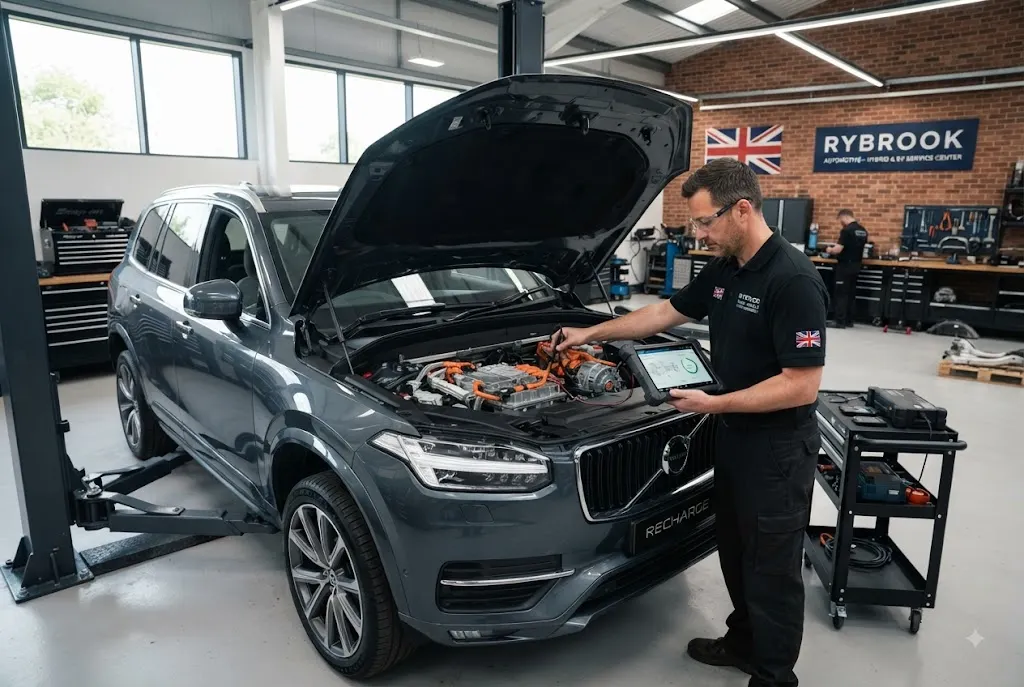
Hybrid servicing is becoming an increasingly important part of the UK automotive aftermarket as motorists continue to use vehicles that combine conventional engines with electric propulsion technology. Unlike traditional petrol and diesel cars, hybrids require workshops to understand both mechanical systems and electrical components, creating new requirements for technicians, equipment and diagnostic processes.
Hybrid technology is not one single system. Full hybrids, mild hybrids and plug-in hybrids use different approaches to combining petrol or diesel engines with electric power. As a result, servicing requirements can vary significantly between models and manufacturers.
For automotive service businesses, this creates both a challenge and an opportunity. Workshops that develop the right skills and equipment can support a wider range of vehicles while preparing for the broader transition towards electric and connected mobility.
Why Hybrid Servicing Is Becoming More Important
Hybrid vehicles have moved from being a relatively specialised part of the market to becoming a familiar sight on UK roads. They offer motorists a combination of internal-combustion and electric propulsion, with some systems able to recover energy during braking and use it to support the vehicle.
The technology can improve efficiency, but it also changes the way some vehicle systems operate. A technician working on a hybrid may need to understand high-voltage components, battery management, electric motors, regenerative braking and conventional mechanical systems within the same vehicle.
The Health and Safety Executive explains that electric and hybrid vehicles can contain high-voltage systems and that repair and maintenance workers may require additional skills, knowledge, specialist tools and equipment.
This means that workshop preparation is about more than buying a diagnostic scanner. Businesses need appropriate training, safety procedures and manufacturer-specific technical information.
Understanding Different Hybrid Services
The term hybrid covers several different vehicle configurations. Understanding these differences is important because the service approach can vary depending on the system fitted to the vehicle.
Full hybrid vehicles
A full hybrid can use its petrol or diesel engine, electric motor or a combination of both to move the vehicle. The battery can also receive energy through regenerative braking and other parts of the vehicle’s operating system.
These vehicles still require conventional maintenance, including checks of tyres, brakes, suspension, fluids and other mechanical components. However, technicians also need to understand the electrical systems that control the hybrid drivetrain.
Mild hybrid vehicles
Mild hybrids generally use an electric motor-generator to support the combustion engine rather than providing full electric propulsion. Many systems operate at 48 volts, although the exact architecture varies between manufacturers.
While mild hybrids may appear closer to conventional vehicles from a servicing perspective, technicians still need to understand the electrical components and the manufacturer’s procedures before carrying out work.
Plug-in hybrids
Plug-in hybrid vehicles combine an internal-combustion engine with a battery that can also be charged from an external electricity supply. This creates another layer of complexity because the vehicle has charging equipment and a larger battery system.
For motorists, plug-in hybrids can provide flexibility between electric driving and combustion power. For workshops, however, servicing requires familiarity with both conventional vehicle systems and electrical propulsion technology.
Hybrid Servicing and Battery Technology
Battery technology is one of the most important areas of hybrid vehicle development. The battery is central to how a hybrid stores and supplies electrical energy, while its management system controls factors such as charging, discharge and operating conditions.
Battery performance can also influence the driving characteristics of a hybrid. However, motorists should not assume that every reduction in fuel economy or change in vehicle behaviour automatically means the battery needs replacing.
A proper diagnostic process should establish the cause of a problem before major components are replaced. Depending on the vehicle and manufacturer, this may involve diagnostic information, battery-system checks and other tests.
Modern workshops therefore need to understand the difference between routine inspection, diagnostic assessment and high-voltage repair. These activities may require different levels of competence.
The HSE notes that competency requirements depend on the type of work being undertaken, with more advanced competence needed for work on high-voltage electrical systems.
What Toyota Hybrid Service Can Involve
Toyota hybrid service is a useful example of how hybrid maintenance combines familiar vehicle servicing with technology-specific considerations. Toyota has been one of the most visible manufacturers in the development and sale of hybrid passenger vehicles, making its systems familiar to many UK workshops.
A Toyota hybrid still requires many conventional maintenance checks. Tyres, brakes, suspension, steering, fluids, lights and other components remain important to vehicle safety and roadworthiness.
At the same time, technicians working on hybrid-specific systems need access to appropriate technical information and equipment. The exact procedures depend on the vehicle model, system generation and work being performed.
This is why workshops should avoid treating hybrid vehicles as if every model uses the same architecture. Manufacturer information matters, particularly when technicians are working near high-voltage components.
GOV.UK guidance for MOT testers explains that hybrid systems can differ between makes and models and advises testers to refer to the vehicle handbook or manufacturer when necessary.
How Hybrid Diagnostics Are Changing Workshops
Diagnostics are becoming increasingly important as vehicles contain more electronic control systems. In a hybrid, diagnostic information can help technicians understand how different components are communicating and whether a warning relates to the engine, battery, electric motor or another system.
This does not mean that a diagnostic code automatically identifies the failed component. Skilled technicians still need to interpret the information and carry out appropriate checks.
For automotive service businesses, this creates a growing need for technicians who can work comfortably with both mechanical and electronic information.
Digital workshop systems can also make the wider process more efficient. A vehicle can be booked electronically, its details can be captured in the workshop system and diagnostic findings can be recorded alongside the job history.
This connects the development of automotive service companies with hybrid technology. As vehicles become more complex, service businesses need systems and people capable of managing more technical information.
Regenerative Braking Changes Maintenance Considerations
Regenerative braking is another important feature of many hybrids. Instead of relying entirely on conventional friction brakes to slow the vehicle, the electric drivetrain can recover some kinetic energy and convert it into electrical energy.
This can change how the braking system is used during normal driving. However, conventional braking components remain important and still need to be inspected according to the vehicle manufacturer’s requirements.
Brake discs, pads and other components can be affected by driving conditions, vehicle use and time. A hybrid should therefore not be treated as maintenance-free simply because regenerative braking is present.
For technicians, understanding how regenerative and friction braking interact can help ensure inspections are carried out appropriately.
Hybrid Servicing Requires Better Technician Training
One of the biggest changes created by hybrid technology is the need for new technician skills. A workshop may have experienced mechanics who are highly competent with conventional engines and mechanical systems, but hybrid vehicles introduce additional electrical considerations.
Training can cover subjects such as identifying high-voltage components, safe isolation procedures, diagnostic techniques and manufacturer-specific repair methods.
The level of training should reflect the work being performed. Routine activities may not require the same competence as work directly involving high-voltage systems.
The HSE identifies different categories of work around electric and hybrid vehicles and emphasises that people carrying out repair and maintenance need appropriate competence for the activities involved.
For workshop owners, investing in technician development can therefore be as important as investing in equipment.
Safety Must Remain Central to Hybrid Services
Hybrid technology introduces safety considerations that do not exist in the same way on conventional vehicles. High-voltage components can store significant amounts of electrical energy, and some systems may remain energised even when the vehicle appears to be switched off.
That is why technicians should follow appropriate manufacturer procedures and workplace safety requirements rather than relying on assumptions about a particular vehicle.
The HSE states that electric and hybrid vehicles can present hazards including high-voltage components, stored electrical energy and unexpected vehicle movement. It also stresses the importance of suitable training and manufacturer-specific information.
Safety procedures should therefore be built into the workshop process from vehicle reception through diagnosis, repair and completion.
Hybrid Services and the EV Transition
Hybrid vehicles are often discussed as part of the wider transition towards electric mobility. They occupy an interesting position because they combine established combustion technology with electric propulsion.
For workshops, experience with hybrid systems can help technicians and businesses become familiar with technologies that are also relevant to fully electric vehicles. However, hybrid and battery-electric vehicles should not be treated as technically identical.
Battery-electric vehicles remove the combustion engine from the propulsion system, while hybrids continue to use an engine alongside electrical components. Their maintenance requirements therefore overlap in some areas but differ in others.
The UK government describes hybrid electric vehicles, battery electric vehicles and plug-in hybrids as different categories of alternatively fuelled vehicles, each with specific considerations for maintenance and safety.
This makes EV servicing a natural next step in the broader workshop technology cluster. Businesses preparing for electric mobility will need to understand which hybrid skills transfer to EV work and which require additional training.
Connected Vehicles Will Influence Future Hybrid Services
Another trend shaping the future of hybrid servicing is vehicle connectivity. Modern cars can generate and communicate large amounts of information through onboard electronic systems.
Connected technology could eventually support more proactive maintenance by helping identify changes in vehicle behaviour before a customer experiences a major problem. For workshops, this could create opportunities to move from reactive repairs towards more planned maintenance.
However, connected servicing also raises questions around data access, privacy, manufacturer systems and the reliability of information. Workshops will need appropriate technical access if they are expected to diagnose increasingly software-dependent vehicles.
Digital workshop platforms can help manage the information once it reaches the business. This is another reason why the broader shift towards garage chains going digital matters. Connected systems can make it easier to manage bookings, service histories, inspections and customer communication across multiple locations.
What Hybrid Servicing Could Look Like in the Future
The future hybrid workshop is likely to combine traditional mechanical expertise with increasingly sophisticated digital tools. Technicians may use advanced diagnostic equipment, battery monitoring systems and connected service information alongside conventional workshop equipment.
Customer communication could also become more digital. Instead of simply receiving a reminder for a service, motorists may receive clearer information about inspections, maintenance recommendations and vehicle condition.
For workshop businesses, this could create a more predictive model of servicing. Vehicle information may help identify potential maintenance requirements earlier, while digital records can make previous work easier to understand.
Nevertheless, technology will remain a support tool. Physical inspections, professional judgement and safe repair procedures will continue to be essential.
How Workshops Can Prepare for Hybrid Growth
Workshops looking to expand their hybrid services can start with a practical assessment of their current capabilities.
First, they should identify which hybrid vehicles are common in their local market. This can help determine the training and equipment most relevant to their customer base.
Second, businesses should establish clear safety procedures and ensure staff understand the limits of their competence.
Third, diagnostic equipment and technical information should be reviewed regularly. Older equipment may not provide the functionality required by newer vehicles.
Finally, customer communication should be considered part of the service. Hybrid technology can appear complicated to motorists, so clear explanations can help customers understand what has been inspected and why particular work is recommended.
Conclusion
Hybrid servicing is becoming an important capability for UK automotive workshops as hybrid vehicles remain part of the changing vehicle market. The technology combines familiar mechanical systems with electric propulsion, battery systems and increasingly sophisticated electronic controls.
For workshops, the response should involve more than purchasing diagnostic equipment. Technician training, manufacturer information, safety procedures and effective customer communication all have an important role to play.
Hybrid technology may also provide a bridge towards wider electrification. Experience with electrical systems, digital diagnostics and connected vehicle technology can help automotive service businesses prepare for the continued growth of electric mobility.
The strongest workshops will be those that combine new technology with sound mechanical expertise. As vehicles become more connected and complex, that balance will remain central to delivering safe, reliable and trustworthy vehicle maintenance.