Garage chains are changing how motorists book, manage and receive vehicle maintenance. The traditional workshop model still depends on skilled technicians and physical equipment, but more of the customer journey is now moving online. From digital bookings and vehicle information to electronic inspections and automated updates, technology is becoming part of everyday automotive servicing.
This shift is not simply about replacing paper with screens. For large automotive networks, digitalisation can connect branches, technicians, customers, vehicles and business systems more effectively. It can also help create a more consistent experience across multiple locations while giving workshop managers better visibility over daily operations.
For motorists, the change is already visible through online appointment systems, vehicle registration searches, digital service information and mobile fitting options. For workshop operators, however, the bigger opportunity lies inside the business: connected workflows, better data, faster communication and smarter decision-making.
Why Garage Chains Are Moving Towards Digital Workshops
Large garage networks operate differently from a single independent workshop. A chain may have dozens or hundreds of locations, multiple service teams, central purchasing systems and a large customer database. Managing all of those moving parts consistently creates a strong case for digital systems.
Digital workshops can connect activities that were previously handled separately. A customer may start by entering a registration number online, select a service, choose a location and book an appointment. The workshop can then use the vehicle information to prepare for the job, while customer communications can be managed through digital channels.
This type of connected workflow can reduce unnecessary administration and make it easier for staff to see what needs to happen next. Modern UK workshop software increasingly brings bookings, jobs, customer information, invoicing and technician workflows together rather than keeping them in disconnected systems.
The same principle applies to larger garage networks. When information can move between branches and central systems efficiently, management teams can gain a clearer picture of demand, capacity and operational performance.
Garage Chains and the Rise of Online Customer Journeys
One of the most obvious areas of change is booking. Customers increasingly expect to arrange routine vehicle services without making a phone call. Online booking can allow motorists to enter their registration details, select a service and find an available appointment at a suitable location.
Kwik Fit, for example, provides online booking for services including tyres, MOTs and servicing, while customers can also manage eligible bookings digitally. Its online system uses vehicle and postcode information to help customers find relevant services and availability.
National Tyres & Autocare also provides online purchasing and booking options across its tyre and autocare services. The company describes a nationwide network supported by online service information and branch-based fitting.
For motorists, this can make garage visits feel more like other modern service experiences. Instead of waiting for opening hours to call a branch, customers can often begin the process online and receive confirmation digitally.
However, the best digital journey does not remove human support. Complex repairs, unusual vehicle problems and technical questions still require experienced staff. Digital systems work best when they make that human interaction more informed and efficient rather than attempting to replace it.
What Digital Workshops Actually Change
A digital workshop is more than a website with an appointment form. The real transformation happens when technology connects the different stages of a vehicle’s visit.
Digital job management
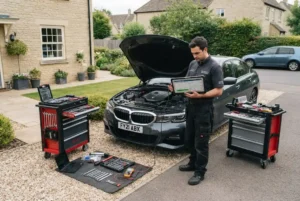
Electronic job cards can give service advisors and technicians a shared view of work in progress. Instead of relying on paper documents or separate notes, teams can record job details, inspection findings and required work within a connected system.
Electronic vehicle inspections
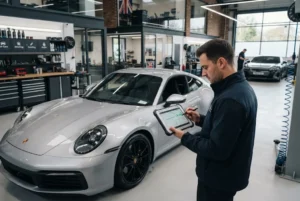
Digital vehicle health checks can make inspection results easier to communicate. Technicians can record observations and, where the system supports it, add photographs or other evidence. Customers can then review recommended work before authorising repairs.
Automated customer communication
Digital systems can support appointment confirmations, reminders, service updates and follow-up messages. This reduces the need for staff to make routine calls while keeping customers informed throughout the workshop process.
Centralised business information
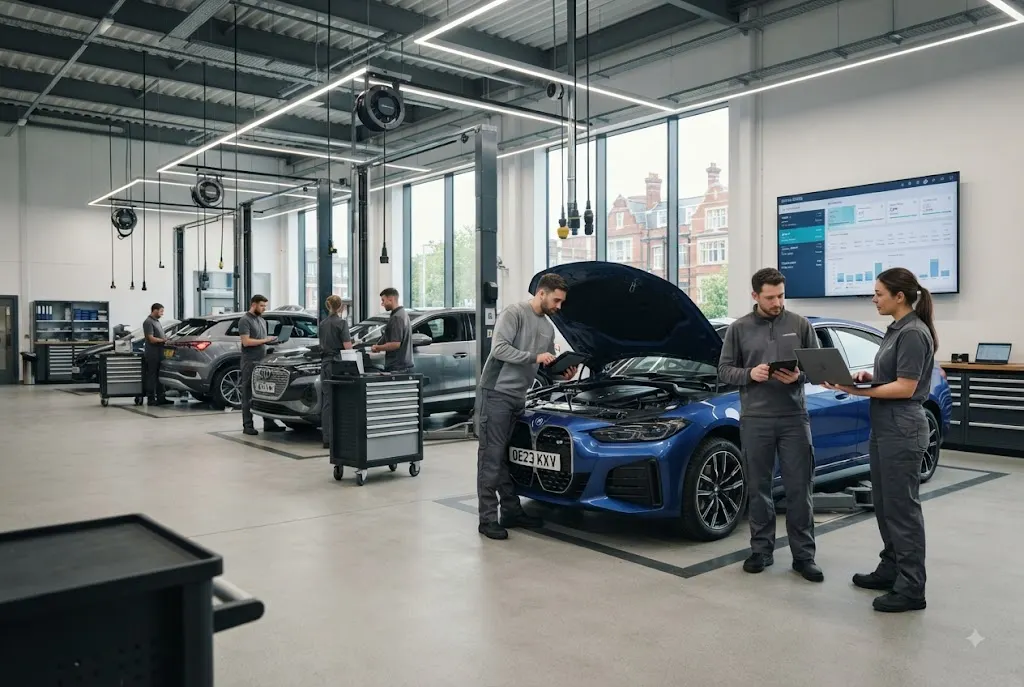
For a multi-site network, centralised information can help management teams understand performance across locations. Booking demand, technician workload, parts requirements and customer activity can potentially be viewed through connected systems.
These capabilities are particularly important as workshops become more technologically complex. The move towards automotive service companies built around connected operations is likely to continue as vehicles themselves become increasingly software-driven.
How Major Garage Networks Can Use Data More Effectively
Data is becoming one of the most valuable parts of workshop digitalisation. Every booking, inspection, repair order and customer interaction can create useful operational information.
Used responsibly, this information can help a garage network understand which services are in demand, where workshop capacity is constrained and when customers are likely to require maintenance. Managers can also use operational data to identify bottlenecks and compare performance between locations.
The important point is that collecting information alone does not create value. Garage chains need systems that turn data into practical decisions. A dashboard that shows an overloaded workshop, for example, is only useful if managers can respond by adjusting appointments, staffing or capacity.
Data quality also matters. Vehicle information, customer records and service histories need to remain accurate if businesses are going to rely on them. Poorly connected systems can create duplicate information and additional administration rather than reducing it.
National Tyres & Autocare, Kwik Fit and Other Networks
The UK automotive aftermarket includes several recognisable national and regional networks, each operating with different business models and service mixes. National Tyres & Autocare, Kwik Fit, ATS Euromaster, Halfords, Protyre and Fix Auto are examples of brands operating within a market where customer convenience and workshop capability increasingly overlap.
National Tyres & Autocare is part of the Halfords family and operates a network of garages offering tyre and vehicle maintenance services. Its online presence includes booking and service information designed to connect customers with local branches.
Kwik Fit demonstrates another part of the digital shift through online booking, online pricing and booking management. Its website also supports digital access to services ranging from tyres and MOTs to servicing and vehicle checks.
The important trend is not whether every network uses exactly the same technology. Instead, it is the broader movement towards combining physical workshop expertise with digital customer journeys and connected operational systems.
Why Service Innovation Matters for Multi-Site Garages
Service innovation can provide an advantage when a garage network needs to deliver a consistent experience across many locations. Customers expect the booking process, pricing information, communication and basic service standards to feel familiar whether they visit one branch or another.
Technology can support that consistency by giving branches common processes and central teams greater visibility. It can also make it easier to introduce new services across a network when the underlying digital infrastructure is already in place.
For example, a business introducing new inspection processes can potentially distribute digital workflows and training materials across multiple sites. Similarly, a new customer communication system can create a more consistent approach to reminders and service updates.
That does not mean every branch should operate identically. Local expertise remains important. The goal is to create a reliable digital foundation while allowing technicians and service advisors to deal with the specific needs of individual customers and vehicles.
Garage Chains Must Prepare for Hybrid and Electric Vehicles
Digital transformation is becoming even more important as the UK vehicle parc changes. Hybrid and electric vehicles introduce different technical requirements, diagnostic processes and training needs compared with many conventional petrol and diesel vehicles.
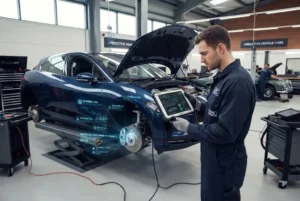
Garage networks therefore need to think beyond digital booking. Workshop technology may increasingly need to support vehicle diagnostics, technical information, service records and technician workflows for multiple powertrain types.
Customers researching hybrid maintenance may also expect garages to explain battery-related checks, manufacturer service requirements and other technology-specific considerations clearly. This is one reason hybrid servicing is becoming an important part of the wider automotive service conversation.
Digital systems can help technicians access relevant information, but they cannot replace appropriate training, equipment or safe working procedures. As vehicle technology develops, garage chains will need to invest in people as well as software.
The Customer Experience Will Become More Connected
The future workshop journey is likely to connect more stages together. A customer could begin with an online booking, receive digital confirmation, receive updates during the repair and access a digital record after the vehicle is collected.
For garage chains, this creates an opportunity to make servicing more transparent. Customers want to know what has been found, what work is recommended and what they are being asked to pay for. Clear digital communication can make those conversations easier.
However, convenience should not come at the expense of trust. Automotive repairs involve safety-critical decisions, so customers still need understandable explanations from qualified professionals. Digital tools should support that relationship rather than make it harder to reach a knowledgeable person.
Challenges Garage Chains Need to Consider
Digitalisation also creates challenges. Large networks often operate legacy systems that were introduced at different times. Connecting them can be expensive and technically complicated.
Staff adoption is another important issue. A sophisticated platform will not improve a workshop if technicians and service advisors find it difficult to use. Training, clear processes and practical implementation are therefore essential.
Cybersecurity and data protection also become more important as more customer and vehicle information is stored digitally. Garage chains need appropriate controls around access, security and data handling.
Finally, businesses need to avoid digitalising inefficient processes simply because the technology is available. The strongest approach is to review the workshop journey first, identify unnecessary steps and then use technology to make the improved process easier to manage.
What the Future Holds for Garage Chains
The next stage of digitalisation is likely to move beyond online booking and electronic paperwork. Connected workshops may increasingly combine vehicle data, workshop management platforms, diagnostic technology, customer communication and business intelligence.
Artificial intelligence may also become more useful for administrative and diagnostic support, although technical decisions will continue to require appropriate professional judgement. Meanwhile, connected vehicles could create new opportunities for maintenance planning and customer engagement.
As these developments mature, garage chains will compete not only on price, location and technical capability but also on how easy they make the entire service journey.
Conclusion
The shift towards digital workshops is changing the role of technology across the UK automotive aftermarket. For garage chains, digitalisation can connect bookings, workshop operations, customer communication and business data into a more coordinated service experience.
Brands such as National Tyres & Autocare and Kwik Fit already provide customers with substantial online access to bookings and vehicle services, demonstrating how digital channels are becoming part of the modern workshop journey.
The bigger opportunity, however, is inside the workshop. Connected systems, better data, digital inspections and improved workflows can help large networks operate more consistently while preparing their teams for increasingly sophisticated vehicles. As the industry moves towards hybrid, electric and connected mobility, service innovation will become an increasingly important part of automotive competitiveness.