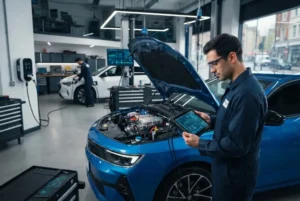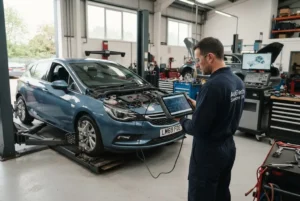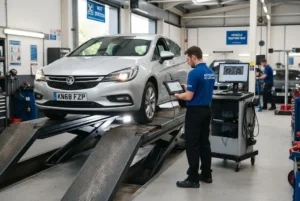
For drivers, the transition does not simply mean finding a garage that can change oil or replace brakes. Workshops increasingly need technicians with the right training, equipment and safety procedures for electrified vehicles. At the same time, digital tools are making it possible to monitor vehicle systems more closely and diagnose problems with greater precision.
The result is a changing automotive service market in which traditional mechanical expertise is increasingly combined with electrical, electronic and digital skills.
Why Hybrid Services Are Becoming More Important
The UK’s vehicle fleet is gradually changing. Battery electric vehicles, plug-in hybrids and conventional hybrids are becoming an increasingly visible part of the market, creating new requirements for workshops and technicians.
Electrified vehicles do not eliminate maintenance. Instead, they change the types of systems that technicians need to understand. High-voltage batteries, electric motors, power electronics, thermal management and sophisticated control systems all require appropriate knowledge.
This means that hybrid services are becoming a distinct area within the wider automotive aftermarket. A garage that wants to work confidently on electrified vehicles needs to consider technician training, insulated equipment, diagnostic systems and appropriate safety procedures.
The development also connects with the wider growth of AI-powered auto inspection services, because modern vehicle diagnostics increasingly depend on digital information as well as traditional mechanical inspection.
EV Servicing Is Different From Traditional Maintenance
Electric vehicles have fewer conventional drivetrain components than petrol or diesel vehicles. There is no traditional engine oil change, and many of the mechanical systems associated with combustion engines are absent.
However, EV servicing still involves important maintenance areas. Tyres, brakes, suspension, steering, cooling systems, charging equipment and other components remain relevant. The battery and high-voltage electrical system also introduce specialised inspection and diagnostic requirements.
Regenerative braking can change brake usage patterns, while the additional weight of some electric vehicles can influence tyre wear and suspension considerations. Software and electronic systems are also increasingly important to vehicle operation.
Consequently, EV servicing is not simply conventional servicing with an electric motor added. It requires a broader understanding of electrical systems, software and vehicle diagnostics.
Battery Technology Is at the Centre of EV Maintenance
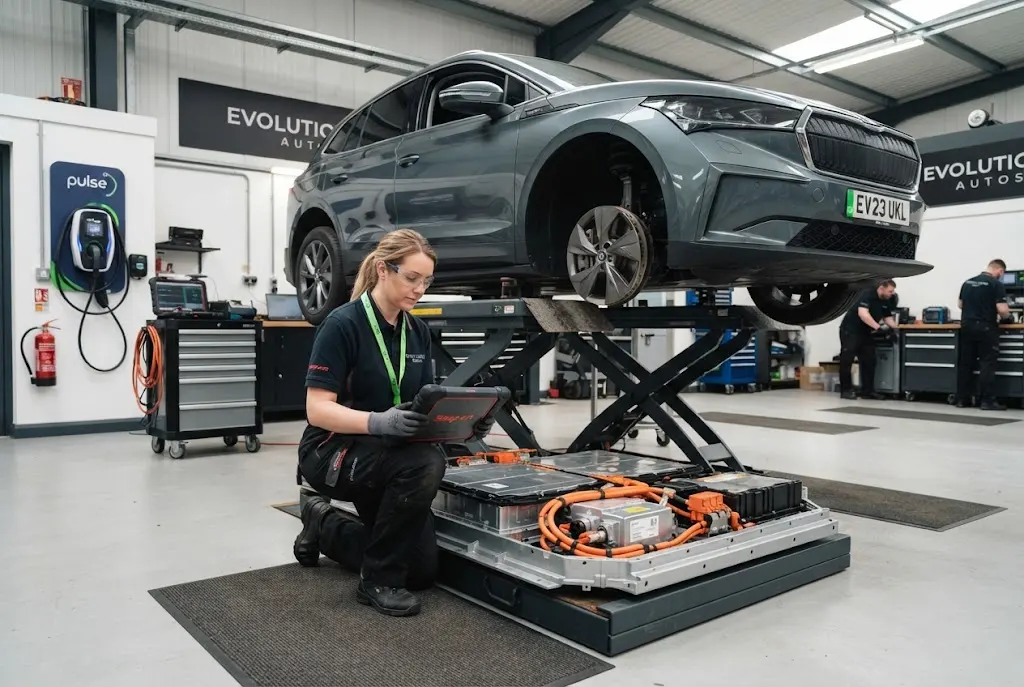
The traction battery is one of the most important components in an electric vehicle. It stores the energy needed to power the vehicle and relies on sophisticated battery-management systems to monitor operating conditions.
Battery technology continues to develop, with manufacturers and researchers working on improvements in energy density, charging performance, durability and thermal management.
For workshops, this creates a need for specialised diagnostic capabilities. Technicians may need to understand battery state, system warnings, thermal conditions and high-voltage safety procedures.
Battery problems can also be difficult to diagnose without appropriate equipment. A warning displayed by a vehicle may relate to a wider electrical or software system rather than a single easily replaceable component.
This is one reason specialist training is becoming increasingly important as electrified vehicles become more common.
Why EV Mechanics Need New Skills
The rise of electric vehicles is changing the skills expected from automotive technicians.
A modern EV mechanic needs more than traditional mechanical knowledge. Depending on the role, technicians may need training in high-voltage safety, electrical systems, battery technology, diagnostic software and manufacturer-specific procedures.
The Institute of the Motor Industry has highlighted the importance of developing automotive skills as vehicle technology changes. Its labour-market research has identified ongoing shortages in technical roles, making training and workforce development important issues for the sector.
For independent garages, this creates both a challenge and an opportunity. Investing in EV capability can allow workshops to serve a growing customer base, but the investment needs to cover equipment, training and safe working practices rather than simply adding an EV label to an existing service.
Charging Infrastructure Is Part of the Bigger Picture
Vehicle maintenance does not exist separately from the infrastructure supporting electric mobility.
As EV adoption grows, charging infrastructure becomes increasingly important to the ownership experience. Drivers need access to suitable home, workplace and public charging options, while businesses operating charging equipment need appropriate installation and maintenance support.
For automotive businesses, understanding charging technology can therefore become part of a broader electrification strategy.
Garages may increasingly encounter customers with questions about charging behaviour, battery condition and vehicle energy systems. Although not every service business will install charging equipment, awareness of the technology can help technicians understand the wider ecosystem in which electric vehicles operate.
Connected Mobility Is Changing Vehicle Maintenance
Electric vehicles are also closely connected to the wider development of connected mobility.
Modern cars can generate substantial amounts of operational data. Connected systems can communicate information about vehicle status, charging, diagnostics and other functions, depending on the vehicle and services available.
This creates opportunities for more proactive maintenance. Instead of waiting for a customer to describe a symptom, connected diagnostics may provide useful information that helps a workshop understand a problem before the vehicle arrives.
The concept fits naturally with the broader move towards digital MOT and service technology, where digital records and connected diagnostics are increasingly integrated into vehicle maintenance.
Smart Transport Requires Smarter Servicing
The growth of electrification is part of a wider transition towards smart transport.
Vehicles are becoming more connected, public charging networks are expanding and software is playing a larger role in how cars operate. These developments create a more integrated mobility environment in which the vehicle is no longer simply a mechanical machine.
For service businesses, this means adapting to a different type of customer requirement. A vehicle owner may need mechanical maintenance, software diagnostics, battery assessment or charging-related guidance during the same ownership period.
The workshop of the future may therefore operate more like a technical service centre, combining mechanical, electrical and digital capabilities.
How Digital Diagnostics Support EV Servicing
Digital diagnostics are particularly important for electric and hybrid vehicles because many vehicle functions are controlled electronically.
Diagnostic tools can provide access to fault information and system data, helping technicians identify areas that require further investigation. This can reduce reliance on guesswork and make the inspection process more structured.
However, diagnostic software is only as useful as the technician interpreting the results. A fault code does not necessarily identify the complete cause of a problem. Professional diagnosis may require additional testing, physical inspection and manufacturer-specific information.
This reinforces the importance of combining technology with skilled technicians rather than treating digital diagnostics as an automatic replacement for expertise.
Predictive Maintenance Could Become More Common
Connected vehicles also create opportunities for predictive maintenance.
Instead of waiting until a component fails, a system could potentially use vehicle data to identify patterns associated with developing problems. This approach is already becoming an important area of automotive technology research.
For EVs, predictive maintenance could be particularly useful for monitoring complex electrical and thermal systems. If unusual readings or changes in system behaviour are detected, a workshop may be able to investigate the issue before it develops into a more disruptive fault.
Predictive systems will not eliminate unexpected repairs, and their effectiveness depends on data quality and appropriate interpretation. Nevertheless, they could support a more proactive approach to vehicle maintenance.
EV Maintenance and Road Safety
Electrification does not change the importance of basic road safety.
Brakes, tyres, steering, suspension, lights and other safety-related systems still require appropriate inspection. Electric vehicles also introduce additional considerations associated with high-voltage systems and battery safety.
Technicians working on high-voltage components need suitable training and equipment. Workshops must also follow appropriate safety procedures when dealing with damaged vehicles or electrical systems.
For motorists, the practical message is straightforward: an electric vehicle still requires professional maintenance even if it has fewer conventional engine components.
Can Hybrid and EV Servicing Reduce Ownership Costs?
It is tempting to assume that fewer moving drivetrain components automatically mean lower maintenance costs. The reality can be more complicated.
Some conventional maintenance requirements may be reduced, but specialist diagnostics, battery systems, software and high-voltage components can introduce different costs.
The total ownership cost depends on the vehicle, its usage, age, condition, maintenance history and the prices charged by the chosen service provider.
This is another reason motorists should look at the overall cost of ownership rather than comparing individual service prices in isolation. The changing economics of vehicle maintenance are explored further in our analysis of rising car service costs.
What Garages Need to Invest In
Workshops that want to provide modern hybrid services need to build capability across several areas.
- High-voltage safety training
- Appropriate insulated tools and protective equipment
- Compatible diagnostic equipment
- Battery and electrical-system knowledge
- Software and technical information access
- Safe procedures for damaged or electrically compromised vehicles
- Ongoing technician training
Equipment alone is not enough. The people using it need the knowledge and training to interpret diagnostic information and work safely around high-voltage systems.
As vehicle technology continues to develop, continuous professional development will become increasingly important.
The Role of Software in Future EV Servicing
Software is becoming a larger part of vehicle maintenance.
Modern vehicles can receive software updates, store extensive diagnostic information and rely on electronic control systems for important functions. This creates a new relationship between servicing and software management.
In some cases, a vehicle issue may be addressed through software diagnostics or an update rather than a conventional mechanical repair. In other cases, software information may help a technician identify an underlying physical fault.
This trend means that the modern workshop needs to understand both physical components and the digital systems controlling them.
What Drivers Should Look for in an EV Garage
Drivers should consider several factors when choosing a garage for an electric or hybrid vehicle.
First, ask whether the workshop has technicians with appropriate EV or hybrid training. It is also sensible to check whether the garage has suitable diagnostic equipment and follows appropriate high-voltage safety procedures.
Customers can also ask for a clear explanation of recommended work. A reputable workshop should be able to explain what has been identified, why the work is required and what the expected cost will be.
Keeping digital and paper maintenance records can also help. A complete service history provides useful context for future technicians and can support the vehicle’s resale value.
The Future of Hybrid Services
The future of hybrid services will be shaped by the continued growth of electrified vehicles, improvements in battery technology, connected mobility and increasingly sophisticated diagnostic systems.
Workshops will need to combine traditional mechanical expertise with electrical and digital capabilities. Technicians will increasingly work with software, high-voltage systems, battery diagnostics and connected vehicle data alongside familiar components such as brakes, tyres and suspension.
At the same time, advances in artificial intelligence and automation may help workshops inspect vehicles more efficiently. Digital inspection platforms and predictive analytics could provide additional information about vehicle condition and support more proactive maintenance.
These developments are part of the wider automotive innovation reshaping the UK mobility sector.
A More Connected Approach to Vehicle Maintenance
The move towards electric and hybrid vehicles is not simply a change in propulsion technology. It is changing the entire automotive service ecosystem.
Batteries require specialised knowledge. Charging infrastructure creates new technical requirements. Connected vehicles generate new forms of data, while software increasingly influences how vehicles operate and are diagnosed.
For garages, adapting early can create opportunities to develop specialist expertise. For drivers, choosing appropriately trained service providers will become increasingly important as the vehicle fleet evolves.
Ultimately, successful EV maintenance will depend on combining technology with skilled human expertise. The most effective hybrid services will not simply focus on the electric components of a vehicle; they will understand the entire system, from battery and charging technology to mechanical safety, software and connected diagnostics.